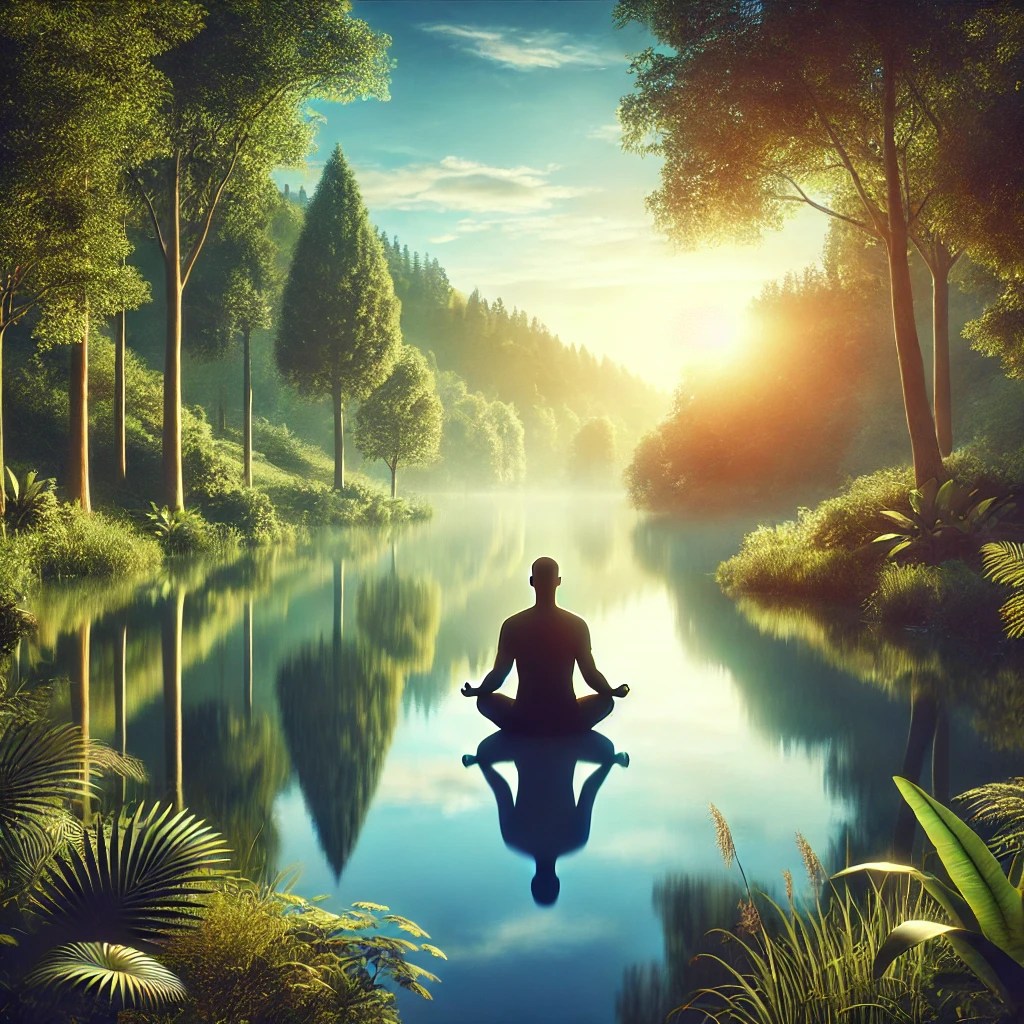
In the pursuit of self-inquiry, there is often a deep yearning to know oneself—to find the answers to the eternal questions that reside within the heart. Yet, the path of inquiry is not one of intellectual striving or relentless effort. Rather, it is the practice of deep relaxation, allowing us to meet ourselves with softness and patience, where the answers we seek are revealed in the quiet moments of being.
Self-inquiry, often associated with the profound teachings of the great sages and mystics, invites us to turn inward. We ask, Who am I? What is the true nature of this self I call ‘me’ and ‘mine’? And yet, if we approach these questions with tension, force, or the urgency of a mind grasping at concepts, we may find that our search remains elusive. The answers are not hidden in the frantic flurry of thought, but in the stillness beneath the surface.
It is here that relaxation becomes essential.
When we think of relaxation, we often associate it with physical rest—lying back, releasing tight muscles, breathing deeply. But relaxation in self-inquiry reaches deeper. It is a surrender of effort, a letting go of the mind’s need to control, to seek, and to grasp. This surrender does not mean abandoning the inquiry; rather, it means approaching it with openness, trust, and a willingness to rest in the unknown. It is through relaxation that we create space for the heart to listen, for the mind to settle, and for the true self to emerge.
The Role of the Body and Breath
The body is an anchor in our journey of self-inquiry. If the body is tense, if the breath is shallow or hurried, it becomes almost impossible to touch the deeper layers of truth that lie beyond the surface of our thoughts. In such a state, we are disconnected from the present moment, caught in the cycle of striving, and far from the clarity that relaxation offers.
When we relax the body, we invite the breath to become fuller, more natural, and more steady. This balance between body and breath is the foundation upon which the mind can find rest. As we settle into this gentle rhythm, we may begin to experience moments of insight that feel like a soft unfolding—revealing truths that are not forced or sought after but emerge as naturally as a flower blooming in the quiet of the dawn.
Rainer Maria Rilke, in his profound meditations on life, often spoke of the need to quiet the heart in order to truly hear the call of the soul. In his letters, he urged his friend to find a place of stillness within: “You must change your life.” This change, however, is not one of striving, but of surrender. It is the willingness to step back and allow life to reveal itself without interference, to trust in the natural unfolding of the self.
The Power of Relaxation in Self-Discovery
It is in the quietude of relaxation that we can truly meet ourselves. We often think of self-inquiry as a process of uncovering, of seeking hidden truths, but in reality, it is much more about releasing—releasing the layers of expectation, identification, and distraction that obscure our true nature. As we relax, we allow ourselves to simply be. In this being, there is no judgment, no need to achieve or possess. There is only presence, and within that presence, all things are revealed.
This process can be likened to gazing into a clear pool of water. When the water is disturbed, it is impossible to see clearly. But when the water is calm, the reflections are crisp and true. The same is true of our inner world. In the stillness, we see ourselves clearly—not as a collection of thoughts and emotions, but as an expression of the divine, a moment of pure consciousness.
Relaxation as a Way of Life
In the context of self-inquiry, relaxation is not merely a practice we engage in during meditation or prayer. It is a way of life—an approach to all aspects of our being. As we begin to recognize the value of relaxation, we can begin to apply it throughout our daily existence. In moments of stress or overwhelm, we can return to our breath, relaxing into the present moment. We can observe our thoughts without becoming entangled in them, letting them pass like clouds drifting across the sky.
The practice of relaxation, then, becomes a reminder that we are not our thoughts or our struggles. We are the space in which they arise. It is through this recognition that we come to see the truth of who we are—not as individuals caught in the drama of life, but as witnesses to the unfolding of all things.
Conclusion: The Gentle Path to the Self
The path of self-inquiry is one of gentleness and openness. It is a path that requires us to relax into the unknown, to soften our grip on certainty, and to trust that the answers we seek are already within us. As we practice relaxation—both on the cushion and in life—we cultivate the inner space necessary to hear the subtle whispers of truth. And in this space, we discover that we are not separate from the life we seek to understand, but an integral part of its boundless unfolding.
May we, in moments of stillness and relaxation, come to know our true nature—a nature that is boundless, peaceful, and free. Through this discovery, we find the greatest treasure: the deep and abiding peace that arises when we stop searching, and simply rest in the truth of who we are.
🙏🕊🙏
 Home Page: Inspirations of Love and Hope
Thank you 🙏