O Divine Source of all creation, The One who is known by many names, And who dwells in every heart, We come before you with humble hearts, Seeking your blessing of peace and harmony.
May your love flow through us like a river, Washing away all hatred, division, and fear, And filling our hearts with compassion for all beings.
Teach us to see beyond our differences, To honor the divine in every person, And to live as instruments of your peace in this world.
May we walk the path of righteousness, Guided by your wisdom and grace, So that our actions may bring healing and unity To a world that so deeply longs for peace.
Let all nations and peoples come together, In a spirit of understanding and respect, Embracing the truth that we are all your children, And that in your eyes, we are one family.
Grant us the courage to forgive, The strength to love without condition, And the wisdom to seek justice and mercy For every living being.
May your light shine in our hearts, And may we carry that light into the world, Bringing hope to the weary, And peace to all who suffer.
In your holy name, we pray, For goodwill on earth, and peace among all beings.
Discovering the Self: Ramana Maharshi’s Guide to Self-Inquiry and True Realization
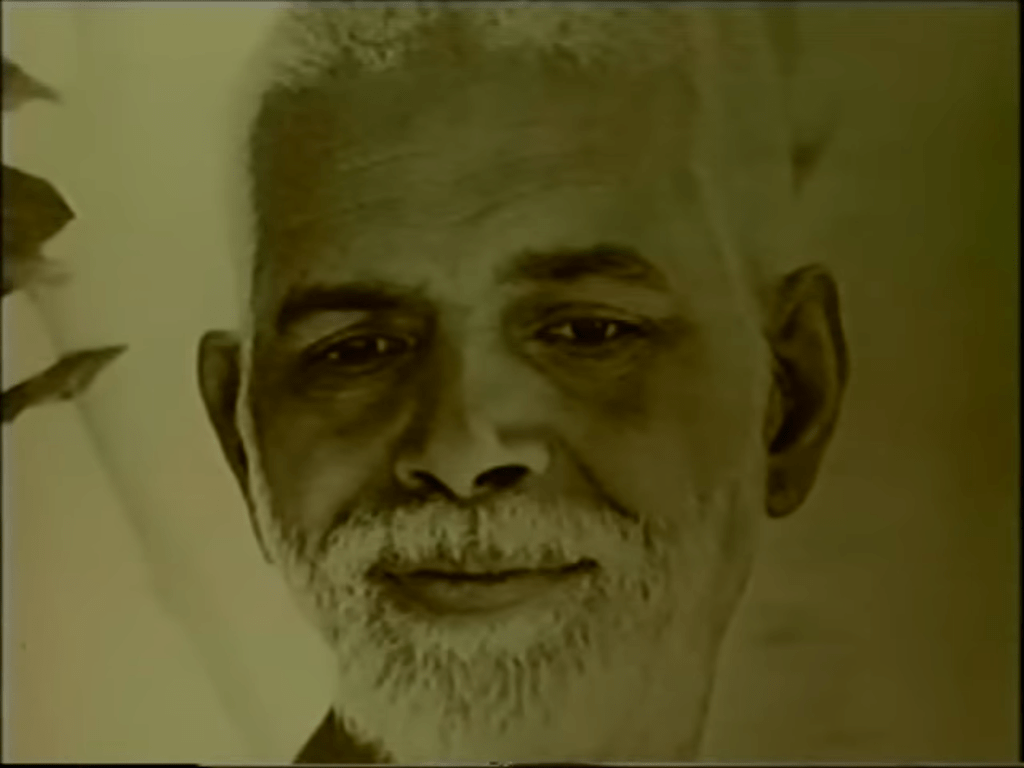
Ramana Maharshi is one of the most revered spiritual teachers of the 20th century, known for his profound teachings on self-realization and non-duality. Born in 1879 in Tamil Nadu, India, he experienced a spontaneous awakening at the age of 16, during which he became acutely aware of the impermanence of the body and the eternal nature of the Self. Following this experience, he left his home and spent the rest of his life on the sacred mountain of Arunachala, where he became a guiding light for spiritual seekers from around the world.
Ramana’s teachings are centered around the practice of Atma Vichara, or self-inquiry, which he considered the most direct path to realizing one’s true nature. Unlike other spiritual practices that involve rituals or external observances, Ramana emphasized turning inward to investigate the true nature of the ‘I’—the sense of individual self that we all experience.
The Essence of Self-Inquiry
Ramana Maharshi’s core teaching can be encapsulated in the question, “Who am I?” He taught that the sense of ‘I’ or ego, which we often associate with our thoughts, emotions, and bodily identity, is merely a superficial layer that veils our true Self, which is pure consciousness or awareness.
The process of self-inquiry involves directing your attention inward, asking yourself where this sense of ‘I’ originates. Ramana explained that by persistently asking this question and observing the ‘I’ thought, one can trace it back to its source. This source is the true Self, the unchanging awareness that underlies all experience.
If One Watches Whence the ‘I’ Arises
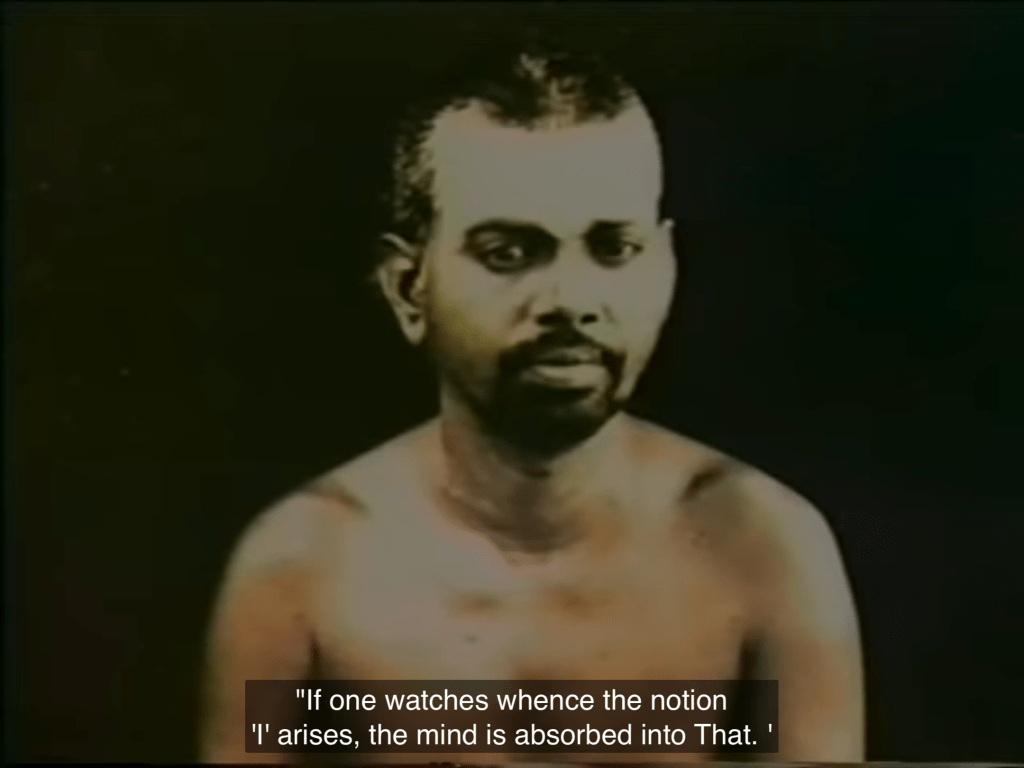
In one of his teachings, Ramana Maharshi stated, “If one watches whence the notion ‘I’ arises, the mind is absorbed into That.” This teaching points to a subtle yet profound practice. The ‘I’ thought is the root of all mental activity and the sense of individuality. By turning attention to this root, rather than being entangled in the branches of thoughts and feelings, the mind can naturally dissolve into its source—pure awareness, which Ramana refers to as “That.”
How to Practice Self-Inquiry
If you find yourself puzzled by this teaching or struggle to sense “That” from which the ‘I’ arises, know that this is a common experience on the path of self-inquiry. The mind, accustomed to focusing outward, finds it challenging to turn inward and settle into stillness.
Here’s how you can approach this practice:
Sit Quietly: Begin by sitting quietly, with your eyes closed if that feels comfortable. Take a few deep breaths and allow your body and mind to relax.
Turn Inward: Gently bring your attention to the sense of ‘I’. This ‘I’ could be a thought, a feeling, or simply the awareness that you exist.
Ask the Question: Silently ask yourself, “Who am I?” or “Where does this ‘I’ arise from?” Don’t seek an intellectual answer. Instead, let the question be a pointer that guides your awareness inward.
Observe: As you focus on the ‘I’, observe its nature. Does it have a shape, a location? Can you find its origin? Be curious, but not analytical.
Rest in the Awareness: As you continue this enquiry, allow the mind to settle. If thoughts arise, simply notice them and gently bring your attention back to the feeling of ‘I’. Over time, the mind may begin to merge with the deeper awareness that is always present.
Realizing the Self
Through persistent practice, you may come to realize that the ‘I’ you have always identified with is not your true Self. The ‘I’ arises and dissolves in the vast expanse of pure awareness—‘That’ which Ramana Maharshi points to. This realization is not something to grasp intellectually, but a direct experience that brings about a profound inner peace and freedom.
Ramana Maharshi’s teachings are a beacon for those seeking to transcend the ego and discover their true nature. The path of self-inquiry, though simple in its approach, can lead to the ultimate realization of the Self—the awareness that is ever-present, unchanging, and beyond all notions of individuality.
Living with Myalgic Encephalomyelitis/Chronic Fatigue Syndrome (ME/CFS) is a daily challenge that requires careful management of energy, rest, and stress. For many, finding effective ways to support the body and mind in this delicate balance can feel overwhelming. Yoga Nidra, often called “yogic sleep,” is a practice that has been gaining attention for its potential benefits in managing ME/CFS. In this post, I’d like to delve deeper into how Yoga Nidra can be a valuable tool for those of us living with this condition.
Supporting Pacing Strategies
Pacing is a cornerstone of managing ME/CFS. It involves carefully balancing activity and rest to avoid pushing the body beyond its limits, which can lead to crashes or flare-ups of symptoms. Yoga Nidra can be an invaluable tool in this regard. Unlike other forms of exercise or even traditional yoga, Yoga Nidra requires no physical exertion. It allows you to take restorative breaks throughout the day, helping to prevent crashes by providing your body with deep rest during these intervals.
For those of us with ME/CFS, the ability to find rest without further depleting our energy is crucial. A short Yoga Nidra session can be integrated into your daily routine as a way to recharge and reset, making pacing more manageable and effective.
Activating the Parasympathetic Nervous System
Another significant benefit of Yoga Nidra is its ability to activate the parasympathetic nervous system (PNS). The PNS is responsible for the “rest and digest” functions of the body, helping to counteract the stress response driven by the sympathetic nervous system. For many people with ME/CFS, the nervous system is often in a heightened state of alertness, which can contribute to symptoms of fatigue, pain, and cognitive dysfunction.
Yoga Nidra guides you into a state of deep relaxation, which helps shift the body from a state of stress to one of rest and repair. This activation of the PNS can reduce the chronic stress response that often accompanies ME/CFS, promoting a sense of calm and helping to alleviate symptoms over time.
Providing Deep Rest and Restoration
One of the most challenging aspects of ME/CFS is the experience of unrefreshing sleep. Despite spending many hours in bed, individuals with ME/CFS often wake up feeling just as tired as before they slept. Yoga Nidra offers a unique solution by guiding practitioners into a state of consciousness that is deeply restful, yet different from regular sleep.
During Yoga Nidra, the body can enter a state that mimics sleep in terms of physical rest, but the mind remains in a state of relaxed awareness. This state of conscious relaxation allows for a deeper level of restoration, potentially offering benefits that complement or even enhance the effects of regular sleep. For people with ME/CFS, incorporating Yoga Nidra into the daily routine could help alleviate the feeling of exhaustion that persists despite adequate sleep.
Releasing Tension and Promoting Emotional Healing
Living with a chronic illness like ME/CFS can lead to the accumulation of physical and emotional tension. Over time, this tension can exacerbate symptoms and contribute to feelings of stress and overwhelm. Yoga Nidra includes practices like body scanning and guided visualization, which can help release deep-seated physical tension and promote emotional healing.
As you are guided to focus on different parts of the body and engage in positive affirmations or visualizations, Yoga Nidra provides a safe space for processing and releasing stress. This can lead to a sense of lightness and relief, which is particularly beneficial for those dealing with the chronic stressors associated with ME/CFS.
Enhancing Mental Clarity and Focus
Cognitive symptoms, often referred to as “brain fog,” are a common and frustrating aspect of ME/CFS. The deep relaxation and stress reduction provided by Yoga Nidra can contribute to improved mental clarity and focus. By calming the nervous system and promoting a state of balance, Yoga Nidra may help reduce the cognitive fatigue that many with ME/CFS experience.
Regular practice of Yoga Nidra can support mental clarity by reducing the underlying stressors that contribute to brain fog, allowing for moments of greater focus and cognitive function.
Conclusion: A Gentle Tool for Holistic Support
Yoga Nidra is not a cure for ME/CFS, but it can be a gentle and effective tool for supporting overall well-being. By offering deep rest, aiding in pacing, calming the nervous system, and promoting emotional and physical healing, Yoga Nidra can be an integral part of a holistic approach to managing ME/CFS.
If you’re living with ME/CFS and looking for new ways to support your health, I encourage you to explore Yoga Nidra. Whether you start with short, guided sessions or incorporate it into your daily routine, this practice may offer the kind of deep rest and healing that’s so essential for managing the complexities of ME/CFS.
Watch a Video:
The vides below is just some the many Yoga Nidra videos online of and are a good place to start. There are countless Yoga Nidra videos on YouTube, each offered by different instructors. Take your time exploring until you discover the ones that resonate best with you.
The occasional Yoga Nidra session can be a relaxing and rejuvenating experience, helping you reduce stress, improve sleep, and promote overall well-being whenever you feel the need for a deep, restorative rest. May this practice bring you peace and renewal, gently supporting your journey toward greater well-being.
This yoga Nidra for insomnia will take you easily into a light hypnagogic state and then down into a deep state of sleep.
Learn more about ME, get involved in support, advocacy, and activism at www.meaction.net
In the vast sky of our consciousness, thoughts are like clouds—ephemeral, shifting, and ever-changing. Guru Rinpoche, Padmasambhava, once said, “Your thoughts naturally occur and naturally dissipate like clouds in the sky. To see for yourself if this is true, look into your own mind.” This profound teaching invites us to directly experience the nature of our thoughts, not as obstacles or distractions but as natural occurrences that reveal the underlying clarity of the mind.
The Nature of Thoughts: Clouds in the Sky
Our minds are often busy, filled with an endless stream of thoughts, emotions, and sensations. These mental activities can feel overwhelming, leading us to believe that they define who we are. However, just as clouds in the sky come and go without altering the vastness of the sky itself, our thoughts are transient, arising from nothing and dissolving back into nothing.
When we closely observe our thoughts without attachment or aversion, we begin to see their impermanent nature. Each thought, no matter how intense or insignificant, arises, lingers for a moment, and then fades away, making room for the next. This process happens naturally, without any effort on our part.
Looking into the Mind: A Path to Clarity
Guru Rinpoche’s instruction to “look into your own mind” is an invitation to practice mindfulness and meditation. By turning our attention inward and observing our thoughts, we can witness their natural ebb and flow. This practice does not require us to stop thinking or to eliminate thoughts; rather, it encourages us to watch them with a gentle curiosity.
As we continue this practice, we might notice that between the thoughts, there are moments of stillness—gaps where the mind is clear and undisturbed. These gaps reveal the pristine nature of the mind, untouched by the comings and goings of thoughts. This pristine mind is our true essence, a state of pure awareness that is always present, even when we are caught up in the whirlwind of our thoughts.
The Pristine Mind: Our True Nature
Recognizing the impermanent nature of thoughts and the underlying clarity of the mind leads to a profound shift in our understanding of ourselves. We begin to see that we are not our thoughts; rather, we are the space in which thoughts arise and dissipate. This space, the pristine mind, is vast, boundless, and inherently peaceful.
By resting in this awareness, we can experience a sense of freedom and spaciousness, even in the midst of life’s challenges. The more we practice, the more we realize that this pristine mind is always accessible, like the clear sky that remains unchanged regardless of the clouds that pass through it.
Embracing the Reality of Thoughts
Guru Rinpoche’s teaching encourages us to directly experience the nature of our thoughts, revealing the pristine mind that lies beneath. Through mindfulness and meditation, we can cultivate the ability to observe our thoughts without getting entangled in them, allowing us to rest in the clarity and peace of our true nature.
As we deepen our understanding of this reality, we can approach life with greater equanimity and compassion, knowing that, like clouds in the sky, our thoughts naturally occur and naturally dissipate, leaving the pristine mind untouched and ever-present. Pristine mind meditation involves resting in this type of awareness, allowing us to return to our innate state of clarity, spaciousness, and inner peace.
The Benefits of Reconnecting with the Pristine Mind
Reconnecting with the ever-present stillness and wisdom within us through pristine mind meditation brings profound benefits to our daily lives. As we practice resting in this awareness, we begin to experience a greater sense of calm and stability. The storms of life, once overwhelming, become less daunting as we learn to view our thoughts and emotions as passing phenomena, rather than something to be feared or controlled. This inner calm allows us to navigate stress and anxiety with more ease, providing a stable foundation from which we can respond to life’s challenges.
In addition to this newfound tranquility, our mental clarity and focus also improve. With a mind less cluttered by constant, often distracting thoughts, we can approach our daily tasks with a sharper focus and a clearer perspective. This heightened clarity not only makes us more effective in our personal and professional lives, but it also allows us to make decisions with greater confidence and insight.
As we continue to engage with the practice of pristine mind meditation, we naturally cultivate a deeper sense of compassion and understanding toward others. Recognizing the transient nature of our own thoughts leads to a profound empathy for the shared human experience. We begin to see that others, too, are navigating their own internal landscapes, which fosters more meaningful and compassionate relationships.
Moreover, the stillness of the pristine mind is a source of boundless wisdom and creativity. When we rest in this awareness, we open ourselves to insights and solutions that might not be accessible through ordinary thinking. This connection to our inner wisdom enriches our creative processes and allows us to approach problems with fresh perspectives, often leading to innovative solutions and deeper understanding.
Finally, the practice of pristine mind meditation strengthens our emotional resilience. By regularly connecting with the deep-rooted stillness within us, we develop an inner strength that enables us to face difficulties with grace and composure. This resilience is born from the understanding that our true nature remains untouched by the temporary storms of life, allowing us to move through challenges with greater ease and confidence.
Incorporating this practice into our daily lives helps us live with a sense of balance, insight, and joy, enriching our experience of life in every moment. As we reconnect with the ever-present stillness and wisdom within, we find ourselves more deeply attuned to the world around us, able to face life’s challenges with equanimity, and to embrace its beauty with an open heart.
🙏🕊️🙏
If you’re interested in exploring this transformative approach further, I highly recommend Orgyen Chowang’s book The Pristine Mind. His teachings provide a clear, compassionate path toward uncovering the inherent purity of our mind, offering a source of deep fulfillment and lasting peace.
In a world often filled with uncertainty and challenges, it is easy to overlook the subtle signs that remind us we are not alone. One such sign is the enigmatic and intricate phenomenon of crop circles. Far from the dismissive explanations often presented in mainstream media, these formations stir something deeper in those who take the time to truly observe them—a sense of wonder, hope, and the presence of a higher intelligence.
As I watch the latest crop circles that have appeared in 2024, I am filled with a profound sense of reassurance. These patterns, with their symmetrical beauty and complexity, seem to speak of an intelligence far beyond our current understanding—an intelligence that is both benign and beneficial. There is a feeling that these designs are not random, but deliberate, as if they are messages or symbols from a higher consciousness that cares for the well-being of our world.
For many years, I have heard stories that resonate with this idea—that if humanity were ever to face the ultimate crisis of nuclear war, these higher beings would intervene, rendering the weapons unusable before they could ever be deployed. This belief in spiritual guardians, watching over us and guiding us, is reinforced by the crop circles. They are a tangible reminder that there may be forces in the universe committed to our survival, peace, and enlightenment.
The presence of crop circles invites us to look beyond the mundane and embrace the mystery of the cosmos. They offer a glimpse into the possibility that we are part of a much larger, interconnected web of existence, where higher powers are constantly at work, protecting and guiding us. The feeling that these formations evoke in me—a sense of being watched over by spiritual guardians—is not one of fear, but of deep comfort and hope.
In a time when the world seems increasingly chaotic, these crop circles provide a sense of spiritual guardianship, a reminder that there is a higher order that transcends our immediate concerns. They invite us to trust in the benevolence of the universe and the unseen forces that work tirelessly to ensure that humanity does not lose its way.
As I continue to reflect on these beautiful and mysterious formations, I am reminded of the importance of staying connected to the greater forces at play in our lives. The crop circles are not just anomalies to be explained away, but symbols of hope, protection, and the possibility of a brighter future. They remind us that even in our darkest moments, there is a higher intelligence guiding us, one that is deeply invested in the well-being of our planet and all who inhabit it.
Let us embrace the mystery and beauty of crop circles, not with skepticism or fear, but with the understanding that they may be a sign that we are never truly alone. They are a beacon of hope, a reminder that in the vastness of the cosmos, there is a loving intelligence watching over us, guiding us toward a more enlightened and peaceful existence.
We start the race with mind and heart aligned, To seek the truth that’s ever hard to find. The path is clear, the way seems oh so straight, Yet round and round we go—oh, twist of fate!
We run through hills of thought and streams of dreams, The finish line, not quite as near, it seems. With every step, we feel the final call, But then we find there is no end at all.
The race we thought would bring us to the goal, Is just the turning of the cosmic whole. For when we think we’ve reached the end of time, We simply find there is no finish line.
The Self we seek is where we’ve always been, The heart, the start, and finish all within. In non-duality, the truth does shine— There’s no finish line at the finish line.
As I sit with the first chapter of the Ramayana, I find myself drawn to the idea of Ayodhya—the city that cannot be subdued by war. This simple yet profound description speaks to something deeper, something within each of us that remains untouched by the chaos of the world.
Ayodhya, the capital of King Dasharatha’s kingdom, is not just a physical city, but a symbol—a metaphor for the pristine mind, the true self that resides within us all. Just as Ayodhya stands strong against external threats, so too does our innermost self, the Atman, remain pure and invincible against the storms of life and the fluctuations of our mind.
In the early pages of the Ramayana, we find ourselves in a kingdom of righteousness, where the people live in harmony under the guidance of a just king. It is a vision of what life can be when we are in tune with our true nature, when the mind is calm and clear, and the heart is aligned with the divine. Ayodhya, in this sense, is our inner sanctuary, a place of peace and stability, untouched by the turmoil of the external world and the inner conflicts of ego and desire.
But as the story unfolds, we know that Rama, the hero of the epic, is exiled from this idyllic kingdom. He leaves Ayodhya, and with that, he leaves behind the safety and serenity of his home. This exile, I realize, is not just a physical journey, but a reflection of our own experience as we move from the innocence of childhood into the complexities of the world.
We are all, in a way, exiled from our own Ayodhya. As we grow, we face the trials and tribulations of life, and our minds become cluttered with the noise of the world—the vrittis and pratyayas, the mental fluctuations and impressions that cloud our true nature. The ego begins to take shape, and we lose touch with that pristine mind, that inner Ayodhya where peace and purity reside.
Rama’s battles during his exile are not just against external enemies, but against the forces that seek to pull him away from his true self. And so it is with us. The challenges we face in life—be they loss, betrayal, or the struggles within our own hearts—are the battles we must fight to reclaim our inner Ayodhya. These are the trials that, if met with courage and wisdom, can lead us back to the realization of who we truly are.
In this way, the Ramayana is more than just a story; it is a map of the spiritual journey. It teaches us that the path to self-realization is not without struggle, but that each challenge is an opportunity to return to the pristine mind, to reclaim the peace and purity that are our true nature.
As I read these early chapters, I find inspiration in this metaphor. Ayodhya is not just a city in an ancient epic; it is the capital of our inner kingdom, the seat of our soul, where the divine presence within us reigns. The journey of Rama is our journey—a journey of exile and return, of losing ourselves in the world only to find our way back to the heart of who we are.
So, as we embark on this exploration of the Ramayana, let us keep in mind this deeper layer of the story. Let us see Ayodhya not just as a distant, mythical city, but as a reflection of our own pristine mind, untouched by the chaos of life. And let us approach each chapter not just as a narrative of ancient battles and heroic deeds, but as a guide to our own spiritual journey, where the ultimate victory is the realization of our true self.
As we read the Ramayana, and reflect on Ayodhya, the unassailable kingdom within, we may find ourselves drawn to its promise of peace, purity, and unwavering truth. Though we may not yet dwell fully within this sacred space, the very knowledge of its existence and the awareness of its presence within us is a profound gift. To aspire to be a citizen of Ayodhya is to commit to the journey of self-realization, to seek the pristine mind that remains untouched by the world’s chaos and the fluctuations of the ego.
Let us consider it a great fortune to even know of Ayodhya’s whereabouts, its possibility, and its promise. This awareness is the first step on the path toward reclaiming our true nature. Each day, with every thought, word, and action, we move closer to aligning with this unshakable core of our being.
May this reflection, and each future post in this series, inspire you, dear reader, to continue on your own journey with a heart full of devotion, wisdom, and love, always keeping the inner Ayodhya in sight. Together, let us aspire to dwell in that place of peace, as we explore the depths of the Ramayana and the timeless wisdom it offers.
🙏🕊️🙏
You can find the edition of the Ramayana used in this series, written by Valmiki and translated by Suparna Ghosh, on Amazon here.
In the ancient temples of India, where the scent of incense mingles with the murmurs of sacred hymns, there exists a timeless connection between the human soul and the divine. Recently, I found myself captivated by a simple yet profound moment: a video of Anandamayi Ma, the embodiment of divine love and wisdom, chanting the sacred names of Rama, Krishna, and Guru. The mantra, gentle yet powerful, seemed to call forth something deep within me—a longing to delve into the rich spiritual tapestry of these names and the stories that have been woven around them for millennia.
This moment of inspiration has led me to embark on a new journey, one that I hope will resonate with you as well. Together, we will explore the Ramayana, one of the greatest epics of ancient India, chapter by chapter. But this will not be a mere retelling of an old story; it will be a journey of reflection and contemplation, aspiring to the introspective and poetic style that resonates deeply within our souls.
The Ramayana is not just a tale of gods, demons, and heroes; it is a profound exploration of the human condition, a guide to living a life of virtue, courage, and devotion. At its heart lies the story of Rama, the embodiment of dharma, who journeys through the trials of life with unwavering righteousness. Alongside him are other divine figures—Sita, the epitome of purity and devotion; Hanuman, the faithful servant; and Krishna, whose playful wisdom and divine love illuminate the path of bhakti, or devotion.
Through this series of reflections, we will immerse ourselves in the Ramayana, allowing its teachings to speak to our own lives and spiritual journeys. Each post will be a meditation on the lessons of the Ramayana, drawing connections to the universal experiences of love, loss, duty, and divine connection.
This project is part of our broader interfaith exploration of spiritual experience and wisdom. We are not promoting any particular belief system, but rather, we are exploring the perennial wisdom found in this ancient teaching and considering how it can be applied to our lives, regardless of our religious background. The phrase “perennial wisdom,” as used by thinkers like Joseph Campbell, captures the timeless truths that transcend specific traditions and speak to the core of our shared humanity.
Inspired by the chant of “Hare Rama, Hare Krishna, Hare Guru,” this series invites us to explore the divine presence within, to reflect on the sacred amidst our daily lives, and to seek the eternal truths that the Ramayana offers. These reflections will aim to be both poetic and accessible, serving as a bridge between the ancient and the modern, the distant and the personal.
This series will unfold at its own pace, allowing us to journey through this epic story together with the time and care it deserves. If you would like to be notified when new posts are added, I invite you to subscribe to the blog. In doing so, you’ll receive updates as we continue this exploration, chapter by chapter, reflection by reflection.
As we embark on this journey, let us remember that the Ramayana is not merely a story from a distant past but a living scripture, a mirror to our own spiritual journeys. Each chapter offers a chance to reflect, to grow, and to connect more deeply with the divine essence that resides within all of us. Let us walk this path together, guided by the wisdom of the ages, and open to the light that transcends all boundaries of faith and culture.
In the vast expanse of India’s spiritual landscape, few figures shine as brightly as Anandamayi Ma. Revered as a saint and mystic, she was a living embodiment of divine grace, known for her profound wisdom and boundless compassion. Her life was a continuous flow of devotion and spiritual ecstasy, and her teachings centered on the realization of the Self and the practice of bhakti, or devotion to God.
It was while watching a video of her chanting “Hare Rama, Hare Krishna, Hare Guru” that I was inspired to delve deeper into the teachings of the Ramayana and to explore the wisdom contained within its verses. This series of reflections is born from that moment of inspiration, and it is with gratitude that I invite you to join me on this journey.
If you would like to witness the moment that sparked this exploration, you can watch the video below. In it, Anandamayi Ma’s serene presence and the heartfelt chant which accompanies the video, serve as a powerful reminder of the divine love that is ever-present, waiting to be discovered within each of us.
May the light of truth, loving-kindness and compassion guide us as we embark on this journey together.
“The more you develop love, devotion, and faith, the more will the Lord manifest in you. He alone knows the way to your deliverance. Surrender yourself completely to Him.”
— Anandamayi Ma
Understanding the Context of the Ramayana in a Broader Spiritual Perspective
As we embark on this journey through the Ramayana, it’s important to recognize the deep spiritual wisdom embedded within this ancient text, and how it resonates across different faith traditions. For those of us coming from monotheistic backgrounds, the concept of deity worship and the use of images in spiritual practice may seem unfamiliar, or even concerning. However, these practices in the Indian tradition carry a profound symbolism that transcends mere ritual.
In Hinduism, the deities such as Rama, Krishna, and others are not worshipped as gods in the way that might be understood in the Western sense, but rather as manifestations of the one infinite, formless reality. The images and stories of these deities serve as focal points for devotion, helping practitioners connect with the divine message they portray in a tangible way. Much like how icons or symbols might be used in other religious traditions to inspire devotion and focus, the deities in the Ramayana are revered as expressions of universal principles like righteousness (dharma), love, compassion and wisdom.
What is the Ramayana?
The Ramayana is an epic narrative that tells the story of Prince Rama, his wife Sita, and his battle against the demon king Ravana. It is a foundational text in Hindu culture, with deep religious, moral, and philosophical significance. Through this epic story, the Ramayana explores themes of duty, devotion, righteousness, and the eternal struggle between good and evil. It is not only a beloved story but also a spiritual guide that has shaped the values, behaviors and beliefs of billions of people for centuries.
The composition of the Ramayana is traditionally attributed to the sage Valmiki, with estimates placing its creation between 500 B.C. and 100 A.D. This epic became a cornerstone of Hindu literature and spiritual thought, profoundly shaping the religious and moral landscape of India.
The Ramayana became a vital text within Hinduism, deeply influencing Indian culture, art, literature, and religious practice. Its stories are told and retold in various forms throughout South and Southeast Asia, making it one of the most enduring spiritual epics in history.
The stories within the Ramayana offer allegories of the spiritual journey, providing guidance on how to live a life in harmony with the divine will. They are not about idol worship in the way that might be condemned in certain religious texts, but rather about understanding, loving and respecting the divine presence in all aspects of life. These teachings invite us to explore the deeper truths of existence, to reflect on the nature of righteousness, and to open our hearts to the universal love that transcends all forms.
The Power of Myth and Storytelling
The Ramayana is a mythic narrative that has evolved over centuries, taking on countless forms as it was passed down from generation to generation. These stories became the underlying fabric of a culture, deeply influencing the spiritual and moral landscape of India and beyond. In many spiritual traditions, including Hinduism, myths are symbolic representations of deeper truths, reflecting the inner journey of the soul and the universal struggle between good and evil. These narratives are living realities, woven into the consciousness of the people, guiding them on their spiritual paths. Through the lens of myth, the Ramayana provides not only moral and ethical guidance but also profound insights into the nature of existence and the divine. By engaging with this epic, we step into a world where the divine interacts with the human, and where every action, choice, and event carries cosmic significance.
The Diversity of Hinduism and the Ramayana
Hinduism itself is not a monolithic tradition but a vast collection of beliefs, practices, and philosophies. Different sects and communities may emphasize different aspects of the Ramayana or even different versions of the text. This diversity is one of the hallmarks of Hinduism, where multiple truths and perspectives can coexist. The Ramayana has inspired countless retellings, each one offering a unique lens through which to view the universal themes of duty, devotion, and the cosmic battle between good and evil.
Exploring the Ramayana Through Valmiki’s Original Version
As we embark on this journey through the Ramayana, we will be drawing inspiration from Valmiki’s original text, translated by Suparna Ghosh. Valmiki’s Ramayana is the traditional and authoritative version of this epic, offering a deep, cultural, and spiritual insight into the story of Rama. By engaging directly with this foundational text, we can explore the Ramayana in its most authentic form, allowing for a richer and more nuanced understanding of its teachings. This approach will enable us to appreciate the timeless wisdom of the Ramayana and reflect on its relevance in both historical and contemporary contexts.
By approaching the Ramayana with an open heart and a willingness to explore these spiritual teachings, we can find common ground between different faith traditions and deepen our understanding of the divine. This study is not about adopting new beliefs, but about engaging with the perennial wisdom that has guided countless diverse seekers throughout history. Together, we will explore these ancient teachings, finding their relevance and application in our lives today.
🙏🕊️🙏
You can find the edition of the Ramayana used in this series, written by Valmiki and translated by Suparna Ghosh, on Amazon here.
Introduction Jesus’ invitation to “follow me” is at the heart of Christian life. But what does it really mean to follow Him? Often, we think of it in terms of outward actions—loving others, serving the needy, and living righteously. While all of this is vital, there is a deeper dimension to following Jesus: abiding in God’s presence, as Jesus himself did. Jesus regularly withdrew to pray in stillness, connecting with His Father in quiet communion. This inward focus is just as crucial to following Jesus as our outward actions.
Jesus’ Example of Stillness Throughout the Gospels, we see Jesus taking time to be alone in prayer (Luke 5:16). He wasn’t just teaching us to pray for what we need, but to rest in God’s presence, to listen, and to be still. When Jesus spoke of the kingdom of God being within us (Luke 17:21), He was revealing that God is not distant but present within each of us. To follow Him means not only to love as He loved, but to seek God as He did—by abiding in the presence of the Father.
Abiding in the Heart: A Call to All Believers In John 15:4, Jesus says, “Abide in me, and I in you.” This is not just a poetic metaphor, but a clear instruction. To abide means to remain, to stay rooted in Him. Jesus calls us to experience God’s presence within, in the quiet of our hearts, just as He did. When we take time to be still and know God (Psalm 46:10), we are following Jesus’ example. We are allowing God’s Spirit to work within us, transforming us into His likeness.
How We Abide in God’s Presence Abiding in God’s presence is not about striving or achieving—it’s about surrender and trust. It’s about creating space in our hearts to listen to God, to rest in His love. We don’t need to perform for God or say the right words; we simply need to turn our attention inward, to the presence of the Holy Spirit within us. In this stillness, we are following Jesus, who modeled this quiet communion with God throughout His ministry.
The Kingdom Within When Jesus said, “The kingdom of God is within you,” He wasn’t speaking in riddles. He was revealing a profound truth about where we encounter God. Following Jesus means recognizing that God’s Spirit is not distant, but as close as our own breath. As we follow Jesus, we learn to turn inward, to abide in this truth, and to let God’s peace fill our hearts. In doing so, we come to know Him more deeply, just as Jesus did.
A Daily Path of Following Jesus Following Jesus is not just about what we do for others—it’s about who we are becoming in Christ. As we spend time abiding in God’s presence, we are shaped and formed by His love. Our actions naturally flow from this inner communion with God. The more we follow Jesus in this way, the more we become like Him—living in love, humility, and peace. This inward journey is not reserved for mystics or saints; it is the path that Jesus invites every believer to walk.
Conclusion To follow Jesus means to emulate not only His actions but His way of being. He taught us to love, but He also showed us how to abide in God’s presence. This invitation is open to everyone. As we follow Jesus, we are called to take time to be still, to rest in the heart of God, and to allow His Spirit to work in us. In this way, we truly become followers of Christ—not just in what we do, but in who we are becoming.
A Simple Practice to Abide in God’s Presence For those who wish to deepen their connection with God and experience His peace, here is a simple five-minute practice that you can do first thing in the morning, before bed, or anytime during the day when you need to return to God’s presence.
Opening Prayer “Dear Lord, I come before You now, seeking Your peace and healing presence. As I quiet my mind and heart, I ask to feel Your Holy Spirit within me. Guide me into rest, ease my anxieties, and fill me with Your everlasting peace. Amen.”
Meditation
Find a comfortable position—either sitting or lying down. Close your eyes gently.
Take a deep breath in through your nose, and slowly exhale through your mouth. Feel the tension melt away as you breathe out.
Begin to notice your breath. No need to change it—just notice the gentle rise and fall of your chest or belly.
As you inhale, silently say to yourself, “Breathing in, I abide in the Holy Spirit.”
As you exhale, silently say to yourself, “Breathing out, I release into God’s peace.”
If your mind wanders, that’s okay. Gently bring your attention back to your breath and these words.
Continue this for five minutes, focusing on the breath and the sense of God’s presence and peace.
Closing Prayer “Gracious God, thank You for Your presence and peace. As I end this time of meditation, I trust in Your love and guidance. Help me carry this sense of stillness and Your Spirit with me throughout the day (or night). May Your peace fill my heart, and may I continue to abide in Your presence in all that I do. Amen.”
In the quiet corners of monasteries, amidst the echo of chanting monks, and within the solitude of wilderness hermitages, Christian mystics have, for centuries, sought to experience a profound union with the Divine. They have traveled inward, transcending the boundaries of ego, and have entered into a sacred communion with God. Their journey is one of deep contemplation, marked by an ascetic discipline that reflects a yearning to touch the eternal. Though these mystics arise from the Christian tradition, their spiritual pursuits bear a striking resemblance to those of yogis—a title traditionally reserved for practitioners within the vast spiritual traditions of India.
At first glance, the practices and language of Christian mysticism and yoga might seem worlds apart. One speaks in the tongue of Christ, the saints, and the Holy Spirit, while the other chants the names of Shiva, Krishna, and the universal Brahman. However, beneath these differing expressions lies a shared journey—a journey toward the ultimate goal of spiritual union, self-realization, and the direct experience of the Divine.
The Quest for Union
The essence of yoga is captured in its very name, which means “union.” Traditionally, this union is understood as the merging of the individual soul with the Divine consciousness—a state of oneness where the separation between self and the cosmos dissolves. This echoes the Christian mystic’s pursuit of “divine union,” a state described by luminaries like St. John of the Cross, where the soul is united with God, experiencing a profound and intimate communion that transcends all earthly understanding.
Both the yogi and the Christian mystic understand that this union is not merely a metaphorical concept but a lived reality, achievable through dedicated practice, surrender, and grace. It is an experience of the heart’s deepest longing fulfilled, where the seeker and the sought become one.
The Path of Inner Transformation
To reach this union, both traditions emphasize the necessity of inner transformation. For the yogi, this often involves practices like meditation, breath control, and ethical living, which purify the mind and body, allowing the practitioner to transcend the ego and experience the true Self. Similarly, Christian mystics speak of a transformative journey often described in stages: purgation (the cleansing of the soul), illumination (receiving divine light and insight), and union (the final, blissful merging with God).
This transformation is not an easy path; it is marked by trials, tests of faith, and the dissolution of old identities. Yet, both the yogi and the Christian mystic embrace these challenges, understanding that they are necessary steps in the journey toward spiritual maturity and enlightenment.
Contemplation and Stillness
Central to both yoga and Christian mysticism is the practice of contemplation—a deep, meditative stillness where the divine can be encountered directly. Yogis engage in dhyana, or meditation, as a means of quieting the mind and opening the heart to the infinite. Christian mystics, too, seek this stillness through contemplative prayer, where words fall away, and one rests in the silent presence of God.
In these moments of stillness, both the yogi and the mystic move beyond the distractions of the world, entering into a space where the divine presence is felt intimately, where God is not a distant figure but a living, breathing reality within.
The Role of Love
For both traditions, love is the highest expression of spiritual attainment. In the Christian mystical tradition, figures like St. Teresa of Avila and St. Francis of Assisi exemplify a life overflowing with divine love, a love that embraces all of creation as a reflection of God. This mirrors the path of bhakti yoga, where devotion and love for the divine are seen as the most direct route to spiritual awakening.
This love is not just a feeling but a transformative force that purifies the heart and mind, drawing the soul closer to its source. It is an all-encompassing love that transcends personal desires, embracing the entirety of existence with compassion and grace.
A Universal Journey
The paths of the Christian mystic and the yogi, though outwardly different, converge at their deepest levels. Both seek to transcend the limitations of the ego, to experience the divine presence in its fullness, and to live a life that reflects this profound spiritual truth. Whether through the sacred silence of a monastery or the disciplined practice of asanas, the goal is the same: to know God, to become one with the Divine, and to embody the sacred in every aspect of life.
In this light, we can see that a Christian mystic is, indeed, a yogi—a practitioner of union, a seeker of divine truth, and a traveler on the path of spiritual awakening. Their journey reminds us that the quest for the divine is a universal one, transcending boundaries of culture and religion, and uniting all seekers in their shared pursuit of the ultimate reality.
“The luminous nature of mind, like the changeless sky, is unaffected by temporary events.”
— Bodhisattva Maitreya
Imagine for a moment a vast, clear sky—limitless, unbounded, and pure. No matter how many clouds pass through, how fierce the storms, or how thick the fog, the sky itself remains unchanged. It is always there, spacious and untouched by the ever-changing weather. This metaphor, beautifully articulated by Orgyan Chowang in his book The Pristine Mind, offers us a powerful insight into the nature of our own mind. While the events of our ordinary mind—our thoughts, emotions, and experiences—may shift and change, the pristine mind, like the sky, remains clear and constant. This realization is fundamental to our spiritual growth and inner peace.
The Metaphor of the Sky and Clouds:
Chowang’s analogy is simple yet profound. The sky represents our pristine mind—our true nature, which is inherently pure and spacious. The clouds, on the other hand, symbolize the thoughts and emotions that arise within us. These clouds can be dark and stormy or light and fleeting, but no matter their nature, they never alter the sky itself. The sky doesn’t cling to the clouds or resist them; it simply allows them to pass through. In the same way, our pristine mind is untouched by the transient mental events that arise and dissolve within it.
The Ordinary Mind vs. the Pristine Mind:
In our day-to-day lives, we often operate from what Chowang calls the “ordinary mind.” This is the aspect of our consciousness where thoughts, emotions, and perceptions arise. It’s where we experience the ups and downs of life, the stress, the joy, the anxiety, and the pleasure. This ordinary mind is reactive, constantly shifting in response to external stimuli. But beneath this ever-changing surface lies the pristine mind—clear, stable, and unchanging. It’s the essence of who we are, untainted by the mental chatter and emotional turbulence that often dominate our awareness.
Realizing the Pristine Mind:
The journey toward realizing and connecting with our pristine mind begins with awareness. By observing our thoughts and emotions without attachment, we can start to see them as clouds passing through the sky of our mind. Meditation is a powerful tool in this process. By sitting in stillness and watching our thoughts come and go, we begin to disidentify with them. We realize that while our thoughts and emotions are transient, there is a deeper part of us that remains unchanged—this is our pristine mind. With practice, we learn to rest in this unchanging awareness, experiencing a profound sense of peace and clarity.
The Importance of This Realization:
Understanding that our true nature is the pristine mind brings immense benefits. It allows us to navigate life’s challenges with greater ease and resilience. When we recognize that the storms of thoughts and emotions are temporary, we are less likely to get caught up in them. We can face difficulties with equanimity, knowing that, like clouds, they will pass. This realization also fosters compassion—for ourselves and others. When we understand that everyone’s ordinary mind is subject to the same fluctuations, we can approach each other with greater kindness and understanding.
Practical Application:
To begin connecting with your pristine mind, try this simple meditation: Close your eyes and take a few deep breaths. Imagine your mind as a vast, clear sky. As thoughts and emotions arise, visualize them as clouds passing through this sky. Don’t try to push them away or hold onto them; simply observe them as they come and go. Notice that no matter what clouds appear, the sky—your pristine mind—remains unchanged. Practice this regularly, and gradually, you’ll find yourself less caught up in the drama of your ordinary mind, and more grounded in the peace of your true nature.
Closing Reflection:
In the hustle and bustle of daily life, it’s easy to get swept away by the ever-changing events of our ordinary mind. But by remembering and connecting with our pristine mind—the clear, spacious awareness that remains untouched by life’s storms—we can find a deep and abiding sense of peace. This realization, as Orgyan Chowang so beautifully explains, is one of the most fundamental insights on the path of spiritual growth. As we move through life, let us strive to remember the sky within us, always present, always pure, no matter the clouds that may pass through.
“The luminous nature of mind, like the changeless sky, is unaffected by temporary events.” As we deepen our understanding and connection to this luminous, unchanging aspect of our being, may we find peace and clarity even in the midst of life’s storms. Like the sky that holds all weather, may we learn to hold all our experiences with the spaciousness of our pristine mind. May this awareness illuminate our path and our interactions, bringing light and compassion to ourselves and others.
🙏🕊️🙏
If you’re interested in exploring this transformative approach further, I highly recommend Orgyen Chowang’s book The Pristine Mind. His teachings provide a clear, compassionate path toward uncovering the inherent purity of our mind, offering a source of deep fulfillment and lasting peace.
Recognizing that attention shapes consciousness empowers us to take control of our mental and emotional states. By consciously directing our focus, we can manage stress, enhance our focus, and foster positive changes in our lives. This intentional use of attention can lead to profound personal growth and transformation.
The Role of Attention in Shaping Experience
Deliberate Focus:
Attention is a powerful tool that we can direct consciously. By choosing what to focus on, we influence our perceptions, thoughts, and feelings, shaping our overall experience.
2. Empowerment Through Awareness:
Being aware of where our attention goes allows us to take charge of our mental landscape. This awareness empowers us to make deliberate choices about what we let into our consciousness.
Managing Stress with Attention
Reducing Cognitive Overload:
Stress often arises from cognitive overload, where too many thoughts and stimuli compete for our attention. By focusing on one thing at a time, we can reduce this overload and manage stress more effectively.
2. Mindful Attention:
Mindfulness practices help us direct our attention to the present moment, reducing stress by preventing rumination on past events or worries about the future. This focused attention brings a sense of calm and balance.
Enhancing Focus and Productivity
Concentration Techniques:
Techniques such as time blocking, where we allocate specific periods for focused work, can enhance our productivity. By dedicating undivided attention to tasks, we can accomplish more in less time.
2. Eliminating Distractions:
Reducing distractions in our environment, such as turning off notifications or creating a dedicated workspace, helps maintain focus. This practice allows us to direct our attention more effectively and achieve better results.
Fostering Positive Change
Positive Affirmations:
Using positive affirmations can help redirect our focus from negative self-talk to empowering thoughts. Repeating affirmations regularly can create new mental pathways that support a positive mindset.
2. Engaging in Positive Activities:
Participating in activities that bring joy and fulfillment, such as hobbies, exercise, and spending time with loved ones, naturally draws our focus to positive experiences. These activities help balance our attention and enhance our well-being.
Conclusion
Harnessing the power of attention is key to managing stress, enhancing focus, and fostering positive changes. By consciously directing our focus, we can take control of our mental and emotional states, leading to personal growth and transformation. Recognizing the influence of attention empowers us to shape our consciousness deliberately, creating a more fulfilling and balanced life. Embrace the power of attention, and observe how it transforms your experience and enriches your journey.
Below is the original source video of the lecture with Swami Parvajika Devyanandaprana, from which these blog posts were inspired. Here you can explore the insightful teachings that have profoundly shaped the content and perspectives shared in this blog.