Discovering the Self: Ramana Maharshi’s Guide to Self-Inquiry and True Realization
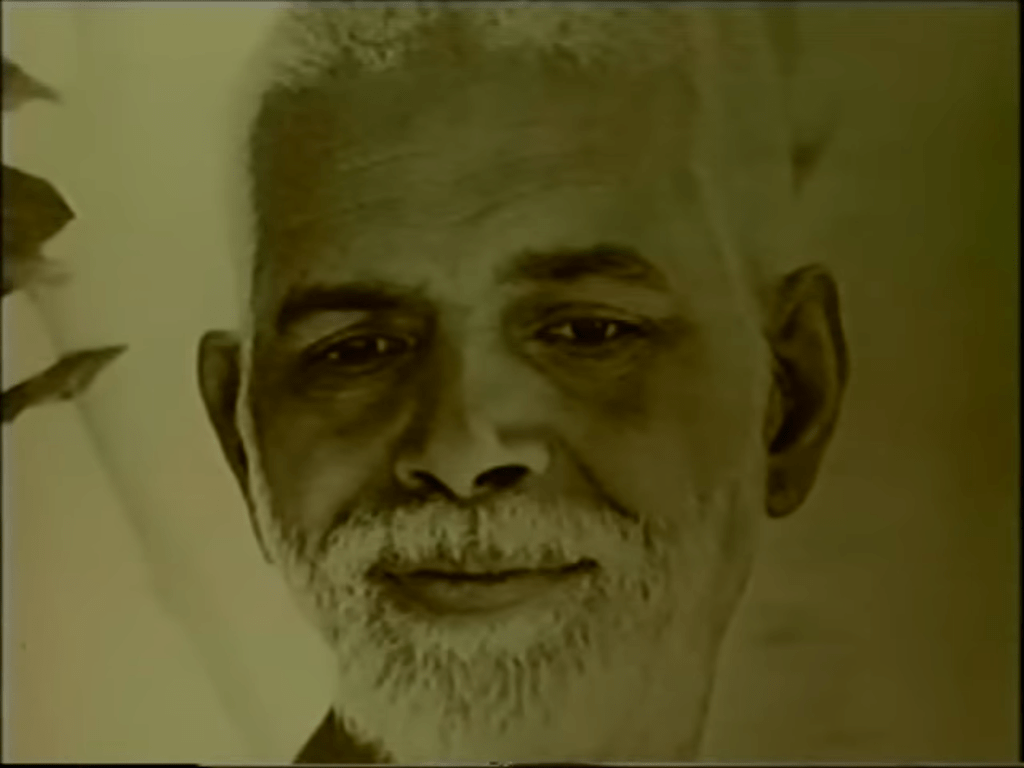
Ramana Maharshi is one of the most revered spiritual teachers of the 20th century, known for his profound teachings on self-realization and non-duality. Born in 1879 in Tamil Nadu, India, he experienced a spontaneous awakening at the age of 16, during which he became acutely aware of the impermanence of the body and the eternal nature of the Self. Following this experience, he left his home and spent the rest of his life on the sacred mountain of Arunachala, where he became a guiding light for spiritual seekers from around the world.
Ramana’s teachings are centered around the practice of Atma Vichara, or self-inquiry, which he considered the most direct path to realizing one’s true nature. Unlike other spiritual practices that involve rituals or external observances, Ramana emphasized turning inward to investigate the true nature of the ‘I’—the sense of individual self that we all experience.
The Essence of Self-Inquiry
Ramana Maharshi’s core teaching can be encapsulated in the question, “Who am I?” He taught that the sense of ‘I’ or ego, which we often associate with our thoughts, emotions, and bodily identity, is merely a superficial layer that veils our true Self, which is pure consciousness or awareness.
The process of self-inquiry involves directing your attention inward, asking yourself where this sense of ‘I’ originates. Ramana explained that by persistently asking this question and observing the ‘I’ thought, one can trace it back to its source. This source is the true Self, the unchanging awareness that underlies all experience.
If One Watches Whence the ‘I’ Arises
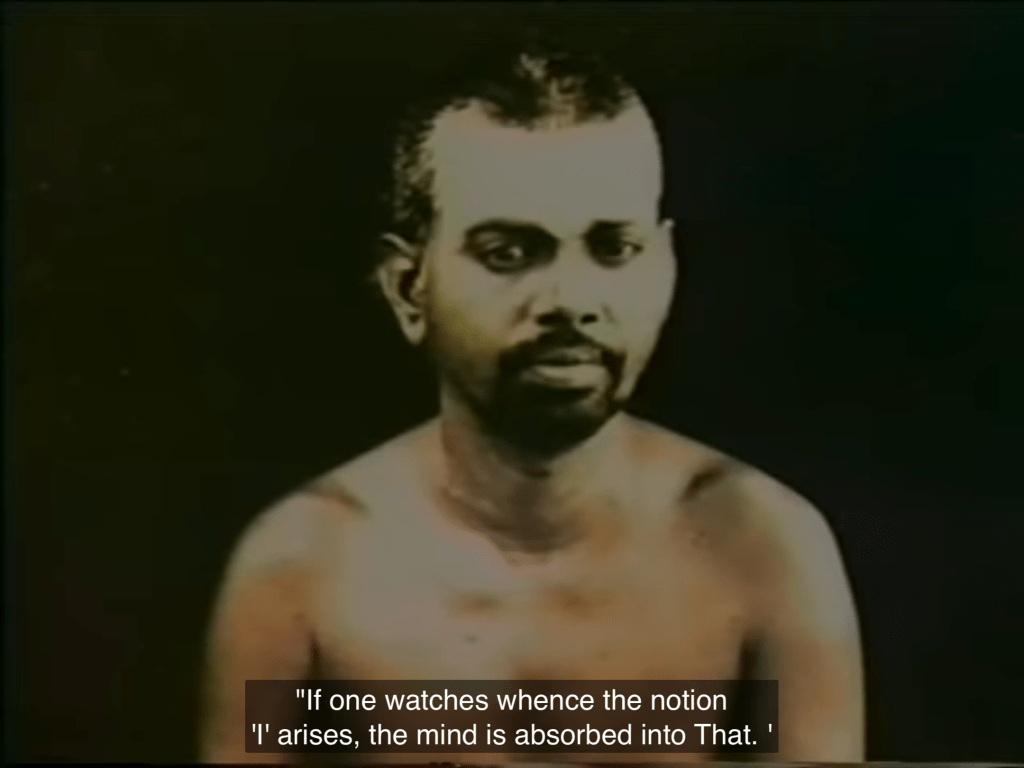
In one of his teachings, Ramana Maharshi stated, “If one watches whence the notion ‘I’ arises, the mind is absorbed into That.” This teaching points to a subtle yet profound practice. The ‘I’ thought is the root of all mental activity and the sense of individuality. By turning attention to this root, rather than being entangled in the branches of thoughts and feelings, the mind can naturally dissolve into its source—pure awareness, which Ramana refers to as “That.”
How to Practice Self-Inquiry
If you find yourself puzzled by this teaching or struggle to sense “That” from which the ‘I’ arises, know that this is a common experience on the path of self-inquiry. The mind, accustomed to focusing outward, finds it challenging to turn inward and settle into stillness.
Here’s how you can approach this practice:
- Sit Quietly: Begin by sitting quietly, with your eyes closed if that feels comfortable. Take a few deep breaths and allow your body and mind to relax.
- Turn Inward: Gently bring your attention to the sense of ‘I’. This ‘I’ could be a thought, a feeling, or simply the awareness that you exist.
- Ask the Question: Silently ask yourself, “Who am I?” or “Where does this ‘I’ arise from?” Don’t seek an intellectual answer. Instead, let the question be a pointer that guides your awareness inward.
- Observe: As you focus on the ‘I’, observe its nature. Does it have a shape, a location? Can you find its origin? Be curious, but not analytical.
- Rest in the Awareness: As you continue this enquiry, allow the mind to settle. If thoughts arise, simply notice them and gently bring your attention back to the feeling of ‘I’. Over time, the mind may begin to merge with the deeper awareness that is always present.
Realizing the Self
Through persistent practice, you may come to realize that the ‘I’ you have always identified with is not your true Self. The ‘I’ arises and dissolves in the vast expanse of pure awareness—‘That’ which Ramana Maharshi points to. This realization is not something to grasp intellectually, but a direct experience that brings about a profound inner peace and freedom.
Ramana Maharshi’s teachings are a beacon for those seeking to transcend the ego and discover their true nature. The path of self-inquiry, though simple in its approach, can lead to the ultimate realization of the Self—the awareness that is ever-present, unchanging, and beyond all notions of individuality.
🙏🕊️🙏
 Home Page: Inspirations of Love and Hope
Thank you 🙏