Month: August 2024

  • The Relationship Between Faith, Works, and Salvation: A Comprehensive Exploration

    Exploring the Interplay of Faith, Works, and Salvation in Christian Doctrine

    Introduction

    In the quest to understand salvation and its implications, we encounter a nuanced relationship between faith, works, and divine judgment. While mainstream Christian teachings often emphasize salvation by grace alone, a deeper examination reveals that works also play a critical role in the final evaluation of a believer’s life. This article explores how these elements interconnect according to biblical teachings.

    Salvation by Grace

    Salvation is fundamentally a gift of grace, as emphasized in Ephesians 2:8-9: “For by grace you have been saved through faith. And this is not your own doing; it is the gift of God, not a result of works, so that no one may boast.” This grace is given by God and received through genuine faith in Jesus Christ. The idea is that no amount of human effort can earn salvation; it is solely through God’s mercy that we are saved.

    The Role of Works

    However, the Bible also indicates that genuine faith produces good works. In Matthew 7:15-20, Jesus teaches that “you will recognize them by their fruits.” The metaphor of trees bearing good or bad fruit underscores the idea that true faith will naturally result in righteous actions. In other words, good works are the fruit of a genuine faith, demonstrating the transformation that faith brings to a believer’s life.

    Judgment and Rewards

    1 Corinthians 3:12-15 describes how believers’ works will be tested by fire. If their works endure, they will receive a reward; if not, they will suffer loss. The phrase “yet will be saved” indicates that while salvation is secured by grace for those who are genuinely given by the Father to Jesus, their rewards or losses in the afterlife are determined by their deeds. Although saved by grace, genuine faith results in works that are valued by God and will be rewarded. While the saved are assured of salvation by grace, the quality of their works reflects the depth of their faith and influences their experience in the afterlife.

    Genuine Faith vs. Superficial Faith

    The distinction between genuine and superficial faith is crucial. Genuine faith is transformative and leads to a life of obedience to God’s will, as seen in James 2:17-24, which states, “Faith by itself, if it does not have works, is dead.” Superficial faith, characterized by mere verbal profession without corresponding action, fails to reflect true transformation and thus may not secure salvation. Jesus warns in Matthew 7:21-23 that not everyone who calls Him “Lord, Lord” will enter the kingdom of heaven, but only those who do the will of His Father.

    Final Judgment and the Second Death

    Revelation 20:11-15 details the final judgment, where those not found in the Book of Life are thrown into the lake of fire. It’s important to clarify that this does not necessarily mean eternal suffering. The concept of the unquenchable fire signifies a fire that fully consumes, leading to obliteration. Those who have rejected repentance face ultimate destruction rather than eternal torment. Their existence ends, and they do not enter the new heaven and new earth.

    Clarifying Salvation and Works

    In essence, while salvation is secured by grace alone, the presence of genuine faith is demonstrated through righteous actions. Good deeds are the fruit of true faith and play a role in how one’s life is evaluated in the final judgment. The key is understanding that deeds are not a means to achieve salvation but rather a natural outgrowth of a faith that has genuinely transformed the believer’s life. Jesus emphasizes this in Matthew 7:17-19, where He states, “Likewise, every good tree bears good fruit, but a bad tree bears bad fruit. A good tree cannot bear bad fruit, and a bad tree cannot bear good fruit. Every tree that does not bear good fruit is cut down and thrown into the fire.” This metaphor underscores that genuine faith, like a good tree, produces good deeds, which are the fruit of a transformed life. Trees that do not bear fruit—representing a faith without works—will be cut down and discarded, illustrating the importance of living out one’s faith through actions.

    Conclusion

    This article integrates key biblical teachings to provide a comprehensive view of the relationship between faith, works, and salvation. It highlights that salvation is a gift of grace, secured for those given to Jesus by His Father and who are thus genuinely transformed by faith. True faith produces good works, and while salvation is assured, rewards in the afterlife are contingent upon how one’s life aligns with God’s will. This balance reflects the depth of genuine faith and its implications for the final judgment.

    Call to Action

    Reflecting on these teachings, consider how your own faith and actions align with God’s will. Are you living out your faith in a way that produces good fruit? How do your deeds reflect the depth of your belief? Engage in self-examination and strive to live a life that honors God and bears lasting fruit.

    Reflective Questions

    • In what ways can you deepen your faith to ensure it leads to genuine, transformative action?
    • How can you incorporate good works into your daily life as a natural outgrowth of your faith?
    • What steps can you take to align your actions more closely with God’s will?
    • How does understanding the relationship between faith and works influence your view of salvation and judgment?

    I invite you to share your thoughts and reflections in the comments section below. Your insights and questions can enrich our discussion and help us grow together in faith and understanding. Let’s engage in a meaningful dialogue and support one another on this spiritual journey.

    🙏🕊️🙏
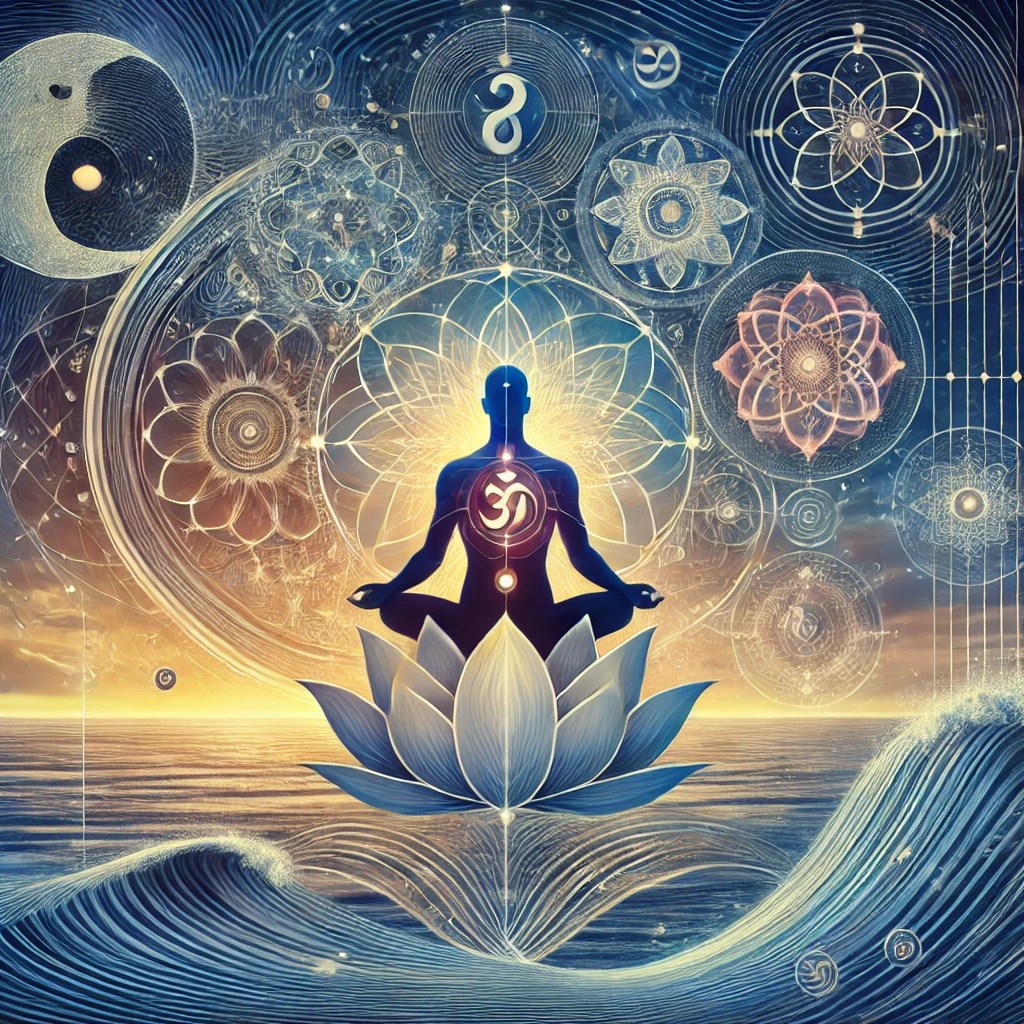
  • I Am Atman: Integrating Western Psychology and Eastern Philosophy to Realize the True Self

    In the journey of self-inquiry, we draw upon the rich wisdom of both Western psychology, particularly the work of Carl Jung, and Eastern philosophy, as taught in Advaita Vedanta, Yoga, and the Yoga Sutras of Patanjali. This powerful integration allows us to explore the full depth of our being—both the conscious and unconscious mind—and realize our true nature beyond the fluctuations of the mind, known as vrittis.

    Recognizing the Vrittis:

    • I am not my thoughts: Many thoughts and memories arise and disappear. I am not my thoughts. I am not my memories. Thoughts and memories are vrittis—fluctuations that come and go in the mind. I am the witness. I am the Atman.
    • I am not my emotions or feelings: Emotions and feelings, like thoughts and memories, are transient. They arise, linger for a while, and then fade away. By recognizing “I am not my emotions” and “I am not my feelings,” I affirm that these, too, are fluctuations in the mind. I am the witness. I am the Atman.
    • I am not my desires and aversions: Desires and aversions also fluctuate in the mind. They arise from conditioned patterns and pass away, often leading to attachment or avoidance. By realizing “I am not my desires” and “I am not my aversions,” I acknowledge that these are transient and do not define my true Self. I am the witness. I am the Atman.
    • I am not my name: My name is a label, a fluctuation in the external world that can change. But I remain the same. My name is a fluctuation that comes and goes. I am the witness. I am the Atman.
    • I am not my pain: In the same way, I am not the pain in my body. The pain in my body is a fluctuation that comes and goes. I am the witness. I am the Atman.

    Beyond the Vrittis: A Deeper Realization

    As we continue the practice of self-inquiry, we may come to an even deeper realization: that even the Atman, the witness, and all concepts of self are also vrittis—fluctuations within consciousness. These are still mental constructs that can be transcended.

    What Am I?

    • Inquiry 1: Beyond the concept of Atman lies the question “What am I?” This inquiry invites us to go beyond all labels, beyond even the idea of being the witness, to experience pure awareness itself—awareness that is beyond all mental constructs and fluctuations.
    • Inquiry 2: What is the experience of my true nature? This question shifts the focus from conceptual understanding to direct experience. Instead of seeking an intellectual answer, this inquiry points directly to the felt sense, the immediate experience of being that transcends all concepts and mental constructs.
    • Inquiry 3: Show me a direct experience of my true nature. This variation communicates directly with the unconscious mind, inviting it to reveal the true Self in a way that goes beyond conscious effort. By asking this, you open yourself to a spontaneous and deeper experience of your true nature.

    Integrating Jung and Vedanta:

    This approach unites the wisdom of Carl Jung’s exploration of the unconscious with the deep spiritual insights of Advaita Vedanta and Patanjali’s Yoga Sutras. By communicating directly with the unconscious and practicing self-inquiry, we can integrate the conscious and unconscious aspects of our being, ultimately transcending them to realize our true nature as pure awareness.

    Pure Awareness:

    In the deepest realization, we see that the Atman, the witness, and even consciousness as a concept are not the ultimate reality. The true Self is beyond all dualities, all fluctuations. It is the ground of being, the pure awareness that is self-luminous and self-existent.

    Living the Inquiry:

    Let the questions “What am I?”, “What is the experience of my true nature?”, and “Show me a direct experience of my true nature” guide you beyond all concepts, allowing all mental constructs to dissolve and reveal the pure awareness that is ever-present.

    The Practice of Self-Inquiry: Transcending the Vrittis

    Once we recognize that all these mental events—thoughts, emotions, desires, aversions, and even physical sensations—are vrittis, we can begin to transcend them. The following practice can help deepen this understanding:

    1. Awareness of Vrittis:

    • Begin by sitting quietly in a comfortable position. Close your eyes and take a few deep breaths, centering yourself in the present moment.
    • Bring your attention to your thoughts, emotions, and any sensations in your body. Notice them as they arise, observing them without judgment.

    2. Witnessing the Vrittis:

    • As you observe these mental events, remind yourself that they are vrittis—transient fluctuations of the mind. Say to yourself, “I am not my thoughts. I am not my emotions. I am not my sensations. I am the witness.”
    • Continue to repeat the mantra, “I am the Atman.” Or “I am the witness.” anchoring yourself in the awareness that you are the unchanging witness.

    3. Calming the Vrittis:

    • Focus on your breath as a way to calm the mind. Follow the natural rhythm of your breath, allowing it to soothe the vrittis and bring your mind into a more peaceful state.
    • If you wish, you can also repeat the mantra “Atman” or “Witness” silently with each breath to further quiet the mental fluctuations.

    4. Dis-identification from Vrittis:

    • Continue practicing self-inquiry by asking, “Who am I?”, “What am I?”, or “What is the experience of my true nature?” Each time a thought or emotion arises, gently return to the realization that you are not the vritti; you are the witness, the Atman.
    • Alternatively, you can communicate directly with the unconscious by asking, “Show me a direct experience of my true nature,” and then remain open to whatever arises.

    5. Transcending the Vrittis:

    • As your mind becomes more still, allow yourself to rest in the pure awareness of the Atman. Experience the space of consciousness that is free from the fluctuations of the mind.
    • Over time, with consistent practice, you will find that the vrittis become less dominant, and your connection to the unchanging, open, spacious awareness of the Atman will grow stronger.

    Conclusion

    By regularly practicing self-inquiry and recognizing the transient nature of the vrittis, we deepen our understanding of our true nature as the Atman. This realization helps us navigate life with greater peace, detachment, and equanimity, knowing that we are not defined by the ever-changing landscape of thoughts, emotions, and sensations. We are the witness, the eternal Self, the Atman.

    Yet, even beyond this realization, we are invited to inquire further: “What am I?” and “What is the experience of my true nature?” These questions guide us beyond all concepts and mental constructs, allowing us to rest in the pure awareness that transcends all dualities. For those seeking an even deeper experience, directly communicating with the unconscious by asking, “Show me a direct experience of my true nature,” can open the door to profound realizations.

    Reflective Questions:

    • How do you experience the vrittis in your daily life?
    • In what ways can you remind yourself that you are the witness, not the vrittis?
    • How has the practice of self-inquiry influenced your understanding of your true Self?
    • What arises when you go beyond the concept of Atman, asking “What am I?”, “What is the experience of my true nature?”, or “Show me a direct experience of my true nature?”

    Feel free to share your thoughts and experiences in the comments. Your reflections can help create a richer community of practice and understanding.

    🙏🕊️🙏

  • Seeking the Kingdom Within: Prioritizing Core Christian Teachings

    Navigating the Essence of Faith Beyond Theological Distractions

    In the vast landscape of Christianity, it’s easy to become sidetracked by the myriad of theological debates and denominational differences. With over 140,000 denominations, each with its own interpretation of scripture and doctrine, the focus can often shift from the essence of Christian practice to intricate theological disputes.

    At the heart of Jesus’ teachings is a call to seek the Kingdom of God within. In Matthew 6:33, Jesus instructs us to “Seek first the Kingdom of God and His righteousness,” emphasizing a pursuit that goes beyond mere belief into the realm of personal transformation and spiritual alignment. This instruction invites us to cultivate an intimate relationship with God, focusing on living in accordance with His teachings rather than getting lost in debates or distractions.

    Historically, early Christianity centered on practical spirituality and the personal relationship between individuals and God. The teachings of Jesus were designed to guide followers toward an authentic and transformative relationship with the divine, not merely to engage in speculative theological discussions.

    In contrast, contemporary culture often brings distractions that can overshadow these core teachings. The focus on popular cultural experiences, such as music, debates, and conflict, can divert attention from the fundamental practice of living out Jesus’ teachings in daily life. Such distractions may lead to a superficial engagement with faith rather than a deep, transformative relationship with God.

    To realign with the essence of Christianity, it is crucial to return to the core teachings of Jesus. This involves prioritizing personal growth and alignment with the Kingdom of God within, nurturing a genuine relationship with Christ. It’s about moving beyond debates and cultural distractions to focus on how we live out the teachings of Jesus in our everyday lives.

    As we navigate the complexities of modern Christianity, let us remember the essence of our faith: a call to seek God’s Kingdom within, to grow in our relationship with Christ, and to live out His teachings with authenticity and devotion. By doing so, we honor the true spirit of Jesus’ message and foster a deeper, more meaningful faith.

    Contemplative Questions:

    • How can we shift our focus from theological debates to a more personal and transformative relationship with God?
    • In what ways can we align our daily lives with the teachings of Jesus, beyond mere belief?
    • What practical steps can we take to ensure that our faith remains centered on the Kingdom of God within?

    I’d love to hear your thoughts on how we can refocus our spiritual practices on the core teachings of Jesus. Share your reflections and experiences in the comments section below!

    🙏🕊️🙏

  • The Eternal Self and the Three States of Experience: Waking, Dreaming, and Deep Sleep

    In the teachings of Advaita Vedanta, one of the most profound insights is the distinction between the transient states of consciousness—waking, dreaming, and deep sleep—and the eternal, unchanging Self. Pravrajika Devyanandaprana eloquently explores this concept in her teachings on self-inquiry, offering a deep understanding of the nature of awareness and the true Self.

    The Three States of Experience

    1. Waking State (Jagrat)
    • Description: The waking state is the most familiar to us, where we engage with the external world through our senses. In this state, we are aware of our body, thoughts, emotions, and the physical environment around us. The waking state is characterized by our active involvement in the world and a strong identification with our physical body and mind.
    • Relation to the Self: In the waking state, we often equate our identity with the body and mind. However, through the practice of self-inquiry, we begin to see that our true nature, the Self, is the unchanging awareness that witnesses all these experiences. We are not merely the body or the mind but the awareness that perceives them.
    1. Dream State (Svapna)
    • Description: The dream state occurs when the mind creates experiences independent of the external world, typically during sleep. In this state, we encounter a world created entirely by our mind, where we might identify with a dream body, experience emotions, and encounter various scenarios.
    • Relation to the Self: The dream state shows us how transient and subjective our experiences can be. Just as a dream is a creation of the mind, our waking experiences are also shaped by our perceptions and thoughts. The Self, however, remains constant, witnessing both the waking and dream states without being affected by them.
    1. Deep Sleep State (Sushupti)
    • Description: The deep sleep state is characterized by the absence of mental activity and sensory experience. In this state, the mind is not active, and there are no thoughts, perceptions, or objects of awareness. It is often described as a state of profound rest and rejuvenation.
    • Relation to the Self: Swamiji offers a profound insight by describing deep sleep as the “experience of absence, not the absence of experience.” In this state, there is an absence of objects—no pratyayas or mental events—but the Self, pure awareness, still persists. While the deep sleep state is free from the fluctuations of the mind and closely resembles the pristine mind or Brahman, it is not fully equated with the realization of these states because there is no conscious awareness of the Self’s true nature.

    Additional Clarification:

    • While the deep sleep state is characterized by the absence of mental activity and sensory experience, it is still considered a state of the mind. In this state, the mind is in a dormant, unmanifest condition—free from fluctuations, yet not entirely absent. It is a state where the mind rests in potentiality, closely resembling the pure awareness of Atman. However, full realization of Atman requires conscious awareness, which is not present in deep sleep. Thus, while deep sleep offers a glimpse into the nature of Atman, it is not equivalent to Atman itself.

    The Invariable Self: The Eternal Witness

    Swamiji emphasizes that the true Self, or Atman, is the one invariable presence that persists through all three states of consciousness. The waking, dreaming, and deep sleep states are transient; they come and go, but the Self remains constant. This Self is the pure awareness that witnesses all experiences without being affected by them.

    • Mind as the Variable: The waking and dream states are considered states of the mind because they are conditioned by mental activities, sensory inputs, and subconscious processes. In the deep sleep state, however, the mind is dormant and free from fluctuations, closely resembling the pure awareness of Atman, yet it is still considered a state of the mind.
    • The Self as the Invariable: Despite the changes in the mind’s states during waking and dreaming, and its quiescence in deep sleep, the Self remains unchanged. This unchanging awareness is the true essence of who we are—beyond the body, mind, and sensory experiences. It is the stable, undisturbed witness that remains present, regardless of the mind’s fluctuations.

    Deep Sleep, Pristine Mind, and Brahman

    The deep sleep state, where there is an absence of objects and mental events, can be seen as a state of pure potentiality. It is closer to the pristine mind or Brahman because it is free from the distractions and fluctuations of the mind. However, it is not the full realization of these states because, in deep sleep, there is still an absence of conscious awareness of one’s true nature as the Self.

    • Pristine Mind: In some traditions, “pristine mind” refers to a state of pure, unconditioned awareness that is naturally calm, clear, and open. The deep sleep state, free from mental activity, resembles this pristine state but lacks the conscious recognition of it.
    • Brahman: Brahman is the ultimate reality in Advaita Vedanta, the infinite, unchanging truth that underlies all existence. The deep sleep state, with its absence of dualistic experiences, is closer to Brahman, but full realization requires the conscious awareness of the Self as Brahman, which is absent in deep sleep.

    The Metaphor of the Sky

    A helpful metaphor to understand this teaching is to think of the Self as the sky and the three states as passing clouds. The clouds—whether stormy or peaceful—come and go, but the sky remains untouched, vast, and unchanging. Similarly, the Self remains pure and constant, while the mind’s states pass through.

    Transcending the Three States: The Practice of Self-Inquiry

    Through self-inquiry, we can transcend identification with the transient states of the mind and recognize our true nature as the unchanging Self. By consistently asking, “Who am I?” or “What am I?” we disentangle our identity from the fleeting experiences of the mind and connect more deeply with the Self.

    • Mindfulness and Awareness: In daily life, cultivating mindfulness helps us stay connected to this invariable Self. By being aware of the transient nature of thoughts, emotions, and experiences, we can maintain a sense of detachment and recognize that the true “I” is always present, beyond these changing states.
    • Continual Inquiry: Practicing self-inquiry, especially during transitions between waking, dreaming, and sleep, deepens our realization that we are not the changing mind but the awareness that witnesses all changes.

    Swamiji’s teachings remind us that while the mind and its states are transient, the Self is eternal. By recognizing and connecting with this unchanging awareness, we can find stability and peace, transcending the fluctuations of the mind and realizing our true nature.

    Reflective Questions:

    • How do you perceive each of the three states of experience in your own life?
    • In what ways can you recognize the invariable Self amidst the changing states of mind?
    • How has the practice of self-inquiry influenced your understanding of your true Self?

    Feel free to share your thoughts and experiences in the comments. Your reflections can help create a richer community of practice and understanding.

    Below is the original source video of the lecture with Swami Parvajika Devyanandaprana, from which these blog posts were inspired. Here you can explore the insightful teachings that have profoundly shaped the content and perspectives shared in this blog.

    🙏🕊️🙏

  • Embracing Our Divine Nature: Insights from Jesus and Psalm 82

    A Call for Justice and Accountability in Modern Leadership

    Introduction

    Psalm 82 is a powerful chapter in the Bible that speaks directly to the responsibilities of leaders and rulers. It challenges them to uphold justice and protect the vulnerable, emphasizing their divine duty. In our contemporary landscape, the themes of Psalm 82 resonate deeply, reflecting the struggles and failures of leadership we witness today.

    Psalm 82: A Call for Justice

    In Psalm 82, God stands in the divine assembly, judging the rulers of the earth. He declares, “I said, ‘You are gods; you are all children of the Most High.’ But you will die like mere mortals; you will fall like every other ruler.” This passage emphasizes the divine nature bestowed upon rulers and their responsibility to act with justice and righteousness. However, God condemns them for failing to defend the weak and the fatherless, for not upholding the cause of the poor and the oppressed. Their failure leads to a call for accountability and justice.

    Parallel with Modern Leadership

    The rulers in Psalm 82 failed to meet their divine responsibilities, much like the perceived shortcomings of today’s leaders in various fields. The lack of justice and protection for the vulnerable is a common thread. Modern leaders often prioritize personal gain over public good, leading to societal divisions and a loss of trust in governance. This parallels the condemnation in Psalm 82, where rulers are called out for their failures and reminded of their mortality and the ultimate accountability they face.

    A Call for Reflection

    Psalm 82 serves as a timeless reminder of the need for integrity and justice in leadership. It calls on leaders to act with righteousness and prioritize the well-being of the vulnerable. For citizens, it is a call to hold leaders accountable and demand ethical governance. Reflecting on Psalm 82 can inspire us to work towards a more just and equitable society, recognizing the divine nature within all individuals and the moral duty we share.

    Conclusion

    The teachings of Psalm 82 are profoundly relevant today. As we navigate the complexities of modern leadership, we must remember the divine call for justice and accountability. Leaders are urged to act with integrity, and citizens are reminded of their power to demand ethical behavior from those in positions of authority. By aligning our actions with the principles of justice and righteousness, we can contribute to a society that honors the divine within us all.

    • How can the lessons from Psalm 82 be applied to our understanding of current leadership issues?
    • In what ways can citizens hold their leaders accountable for justice and ethical behavior?
    • How can individuals and communities work towards creating a more just and equitable society?

    Let’s explore together how embracing our dual nature can transform our lives, as suggested by the teachings of Jesus. We are truly made in the image of God. I invite you to share your thoughts and experiences in the comments section below.

    🙏🕊️🙏

  • Penetrating the Five Sheaths: A Path to Self-Inquiry and Realization

    Introduction:

    The practice of self-inquiry, a central tenet of Advaita Vedanta, guides us on a profound journey to uncover the true nature of the Self, or Atman. This process involves penetrating through the five sheaths, or koshas, that veil our true essence. Pravrajika Devyanandaprana, in her presentation on self-inquiry, emphasizes this technique as a method to transcend our physical, mental, and emotional identities. This blog explores these five sheaths and their relation to the practice of self-inquiry.

    The Five Sheaths:

    1 Annamaya Kosha (The Physical Sheath):

    • Description: The outermost layer, Annamaya Kosha, represents the physical body, sustained by food and material elements. It includes the skin, muscles, bones, and all other physical aspects.
    • Role in Self-Inquiry: Self-inquiry begins by recognizing that we are not merely our physical body, even though it is often our most immediate identity. By asking “Who am I?” we start to discern that our true Self is beyond the physical form.

    2 Pranamaya Kosha (The Vital Energy Sheath):

      • Description: This sheath involves the life force, or prana, which energizes the body and governs physiological functions such as breathing, circulation, and digestion.
      • Role in Self-Inquiry: As we inquire “Who am I?” we move beyond the identification with our breath and vital energy. This step brings us closer to understanding our deeper nature, recognizing that the life force is a layer we can transcend.

      3 Manomaya Kosha (The Mental Sheath):

        • Description: The Manomaya Kosha is the layer of the mind, encompassing thoughts, emotions, and perceptions. It governs our daily mental activities and reactions to the world.
        • Role in Self-Inquiry: Through self-inquiry, we learn to see that we are not our thoughts or emotions. By persistently questioning “Who am I?” we begin to detach from the mental constructs and realize a deeper aspect of our being.

        4 Vijnanamaya Kosha (The Wisdom Sheath):

          • Description: This sheath encompasses intellect, discernment, and higher cognitive functions. It is responsible for understanding, judgment, and wisdom.
          • Role in Self-Inquiry: Even our intellect and reasoning are not the ultimate Self. Self-inquiry encourages us to look beyond these cognitive functions by consistently questioning and observing that our true Self lies beyond intellectual understanding.

          5 Anandamaya Kosha (The Bliss Sheath):

            • Description: The innermost sheath, Anandamaya Kosha, is associated with deep contentment and joy, often experienced in deep meditation or sleep.
            • Role in Self-Inquiry: While this sheath is closer to the Atman, even bliss is a layer to be transcended. Self-inquiry helps us understand that the true Self is beyond even this profound state of joy, resting in pure awareness.

            Cultivating Self-Inquiry:

            • Practical Application: To cultivate self-inquiry, start by incorporating the mantra “Who am I?” or “What am I?” into your daily meditation. Use this question to explore and transcend each sheath, moving closer to the realization of your true Self.
            • Integration with Meditation: Integrate self-inquiry with other meditation practices like breath awareness or mindfulness. Allow the question to redirect your attention back to the felt sense of awareness, helping you penetrate each layer.

            Conclusion:

            The practice of self-inquiry is a powerful tool for uncovering the true nature of the Self by systematically penetrating through the five sheaths. As we transcend our physical, mental, and emotional identities, we move closer to realizing the Atman, our true essence. Self-inquiry is a lifelong practice that deepens our understanding of who we truly are. Future blog posts related to self-inquiry will be posted in this category, providing continued insights and guidance for those interested in this profound spiritual journey.

            Reflective Questions:

            • How do you perceive each of the five sheaths in your own experience?
            • What challenges do you face in identifying with or transcending these sheaths?
            • How has the practice of self-inquiry influenced your understanding of your true Self?

            Feel free to share your thoughts and experiences in the comments. Your reflections can help create a richer community of practice and understanding.

            Below is the original source video of the lecture with Swami Parvajika Devyanandaprana, from which these blog posts were inspired. Here you can explore the insightful teachings that have profoundly shaped the content and perspectives shared in this blog.

            🙏🕊️🙏

          1. Revelation 2024: Jesus Speaks to the Modern Church of Philadelphia

            “I know your deeds. See, I have placed before you an open door that no one can shut. I know that you have little strength, yet you have kept my word and have not denied my name.”
            (Revelation 3:8)

            In a gathering filled with representatives of the Church of Philadelphia, there is a palpable sense of dedication and perseverance. These individuals, though weary, have remained steadfast in their faith. Jesus stands among them, His presence radiating encouragement and unwavering support.

            My faithful messengers of Philadelphia and all who gather in this devoted assembly, your steadfastness in the face of adversity and your unwavering commitment to my word have not gone unnoticed. You have little strength, yet you have kept my word and have not denied my name. In a world that often values power and prestige, you have shown that true strength lies in faithfulness and perseverance.

            The modern world presents many challenges that test your resolve. The allure of power, the pressures of societal expectations, and the temptations to compromise your values are ever-present. Yet, you have remained true to your faith, standing firm in the face of these trials.

            To you, messengers of Philadelphia, I speak with deep admiration and hope. Be encouraged, for I have placed before you an open door that no one can shut. Your faithfulness has paved the way for opportunities that transcend worldly limitations. Embrace these opportunities with confidence, knowing that your perseverance has prepared you for the tasks ahead.

            Renew your commitment to uphold my word and live out your faith with integrity. Be a beacon of hope and encouragement to those around you, showing that true strength is found in steadfast devotion and unwavering commitment to righteousness. Let your actions continue to reflect the love and compassion that are the hallmarks of my teachings.

            Carry my words of encouragement and promise with you as you leave this place. Let your lives be a testament to the power of faithfulness and the boundless opportunities that lie ahead. May your strength be renewed, your resolve deepened, and your hearts fortified by the knowledge that you are walking through doors that no one can shut.

            May the Father bless you abundantly, granting you the wisdom to recognize and seize the opportunities before you. May He guide your steps and empower you to continue in your faithful journey. Go forth as messengers of Philadelphia, united in purpose and fortified in faith.

            Reflect on your journey as messengers of the Church of Philadelphia. How can you continue to uphold my word and embrace the opportunities that lie ahead? What steps will you take to remain steadfast in your faith and be a beacon of hope and encouragement to others?

            Rise together, my friends, united in purpose and steadfast in faith. Walk through the open doors with hearts full of hope and confidence, knowing that your faithfulness has prepared you for the path ahead. Let your lives be a testament to the enduring message of Philadelphia—a message of perseverance, faithfulness, and the boundless possibilities that come from unwavering commitment to my word.

            With love and grace,
            Jesus

            🙏🕊️🙏

          2. The Yoga of Carl Jung: Integrating the Ego, Atman, and Brahman

            “Be patient toward all that is unsolved in your heart and try to love the questions themselves, like locked rooms and like books that are now written in a very foreign tongue. Do not now seek the answers, which cannot be given you because you would not be able to live them. And the point is, to live everything. Live the questions now. Perhaps you will then gradually, without noticing it, live along some distant day into the answer.”

            ~ Rainer Maria Rilke, “Letters to a Young Poet”

            In exploring the depths of human consciousness, both Carl Jung’s psychological theories and yogic philosophy offer profound insights into the nature of the self. Despite originating from different cultural and intellectual traditions, they converge on a central theme: the integration of various aspects of the self to achieve wholeness and enlightenment. This post delves into the parallels between Jung’s concepts and yogic teachings, focusing on the roles of the ego, Atman, and Brahman.

            The Self According to Carl Jung

            Carl Jung, a pioneering psychologist, introduced the concept of the Self as encompassing both the conscious and unconscious aspects of the psyche. He believed that the process of individuation, or personal development, involves integrating these unconscious elements into conscious awareness. This journey toward self-realization and wholeness allows individuals to uncover deeper truths about themselves and achieve psychological harmony.

            Yogic Philosophy: Ego, Atman, and Brahman

            In yogic philosophy, the self is understood through the interplay of the ego, Atman, and Brahman:

            • Ego: The ego represents the individual, conscious identity, marked by personal desires, fears, and thoughts. It is the part of the self that interacts with the world and perceives itself as separate from others.
            • Atman: Atman is the true Self, the deeper, unchanging essence of an individual beyond the ego. It is pure consciousness and awareness, representing the core of one’s being.
            • Brahman: Brahman is the ultimate, universal consciousness, encompassing all existence. The realization of Brahman involves understanding that Atman (the individual Self) is not separate from this universal essence.

            Integrating Jungian and Yogic Perspectives

            When we align Jung’s idea of the Self with yogic teachings, a comprehensive picture of self-realization emerges:

            1. Ego and Ordinary Mind: In both frameworks, the ego or ordinary mind is the initial stage of self-awareness. It involves the individual’s interaction with the world, characterized by fluctuating thoughts (vrittis) and personal narratives.
            • The ego experiences separation and individuality.
            1. True Self (Atman) and Stable Vrittis: Moving beyond the ego, the individual begins to experience the true Self or Atman. This state is marked by stable vrittis and similar pratyayas (mental contents), indicating a more unified and coherent state of consciousness. Here, the sense of “I” transitions from the personal ego to the deeper true Self.
            • Stable vrittis and similar pratyayas reflect a unified consciousness.
            1. Universal Self (Brahman) and Pure Awareness: The ultimate realization involves understanding that the true Self (Atman) is one with Brahman, the universal consciousness. In this state, there is no distinction between the individual self and the universal Self. This realization aligns with the experience of pure awareness in yogic contemplation, where the mind transcends individual thoughts and perceptions to rest in its true, unchanging nature.
            • The true Self (Atman) is fundamentally connected to the universal consciousness (Brahman).

            The Connection Between Ego, True Self, and Universal Self

            An important insight from this integration is understanding the relationship between the ego, True Self, and Universal Self:

            • Ego as a Fluctuation of the True Self: The ego, with its individual identity and personal narratives, can be seen as a temporary fluctuation or expression of the deeper True Self (Atman). While the ego experiences separation and individuality, it is ultimately a manifestation of the underlying, unchanging awareness of Atman.
            • True Self as a Fluctuation of the Universal Self: Similarly, the True Self (Atman) can be understood as a particular expression or fluctuation of the Universal Self (Brahman). While Atman retains a sense of individual consciousness, it is fundamentally connected to and inseparable from the universal, all-encompassing consciousness of Brahman.
            • Inherent Connection: This perspective highlights that, whether we are aware of it or not, we are all inherently connected through the Universal Self. Our individual experiences and identities are different expressions of the same underlying reality.

            Recognizing that the ego is a fluctuation of the True Self, and the True Self is a fluctuation of the Universal Self, helps us understand our inherent interconnectedness. This realization fosters a sense of unity and compassion, knowing that at the deepest level, we are all part of the same universal consciousness.

            Practical Exercise: Self-Inquiry and Integration

            To help experientially understand these concepts, here are a few exercises based on self-inquiry, which integrate conscious and unconscious experiences. Each of these steps can be a lifetime practice. Understanding or realization of these ideas and practices may immediately strike an intuitive chord, but direct experience may require further contemplation and meditation. As Rilke suggests, sometimes it’s more important to live the questions than to immediately understand the answers. These steps are also not necessarily linear as presented; each step can unfold organically in its own way and time. Therefore, when studying and practicing these teachings, patience is truly a virtue.

            Step 1: Settle into Meditation

            Find a quiet place and sit comfortably. Close your eyes and take a few deep breaths, allowing your mind to settle.

            Step 2: Begin Self-Inquiry

            • Ask yourself, “Who am I?” or “What is this ‘I’ that I experience?”
            • Allow any mental events, fluctuations, experiences, thoughts, feelings, sensations, memories, or beliefs to arise without judgment. Simply observe them.

            Step 3: Observe the Ego

            • Notice the thoughts and feelings that are tied to your personal identity (ego). These might include your name, roles, likes, dislikes, desires, aversions, hopes, and fears.
            • Recognize these as fluctuating vrittis and pratyayas of the ordinary mind.

            Step 4: Move to the True Self (Atman)

            • Shift your focus to the awareness that is observing these thoughts and feelings. This awareness is stable and unchanging.
            • Ask yourself, “What is the nature of this awareness?” or “Who is aware of these thoughts?”
            • Experience this deeper sense of “I” that is beyond personal identity. This is the Atman, your true Self.

            Step 5: Contemplate the Universal Self (Brahman)

            • Reflect on the idea that this true Self (Atman) is not separate from the universal consciousness (Brahman), in the same way that waves are not separate from the ocean.
            • Meditate on the oneness of all existence, recognizing that your true Self is part of this greater whole.

            Step 6: Integrate the Experience

            • Spend a few moments in silence, allowing the experience to integrate into your awareness.
            • When you’re ready, gently open your eyes and carry this sense of expanded awareness with you into your daily life.

            Conclusion

            The integration of Jungian psychology and yogic philosophy provides a comprehensive framework for understanding the self. By recognizing the roles of the ego, Atman, and Brahman, and integrating these aspects through self-reflection, meditation, and contemplation, individuals can move toward a state of wholeness and enlightenment. This journey not only enhances personal well-being but also fosters a deeper connection with the universal consciousness, embodying the true essence of both psychological and spiritual growth.

            I Live My Life in Widening Circles

            by Rainer Maria Rilke

            I live my life in widening circles
            that reach out across the world.
            I may not complete this last one
            but I give myself to it.

            I circle around God,
            around the primordial tower.
            I’ve been circling for thousands of years
            and I still don’t know: am I a falcon,
            a storm, or a great song?

            🙏🕊️🙏

            Explore the profound integration of Carl Jung’s psychological theories and yogic philosophy in understanding the self. This blog delves into the roles of the ego, Atman, and Brahman, providing insights into achieving wholeness and enlightenment. Learn practical self-inquiry exercises to harmonize conscious and unconscious mind, fostering unity and spiritual growth. Discover how Jung’s concepts align with ancient yogic teachings, guiding you toward a deeper connection with universal consciousness.
          3. Discovering the Divine Within: Living as Spiritual Beings in a Human World

            Embracing Our Dual Nature: Human and Divine.


            In Christian teachings, Jesus is often celebrated as both fully human and fully divine—a profound mystery that reveals the depth of his nature. But what if this teaching also speaks to a deeper truth about all of us?

            Christianity teaches that we are to navigate life by choosing between good and evil, guided by our higher, divine nature rather than our more earthly impulses. This teaching is not merely about Jesus; it reflects a universal truth about our own existence. We are not just flesh and bone, but also possess a divine essence.

            Jesus’ dual nature serves as a powerful reminder that we too embody both human and divine qualities. Just as he lived out his divine nature while managing human frailties, we are invited to recognize and cultivate our own divine aspects.

            Embracing Our Dual Nature

            Understanding and embracing our dual nature—both human and divine—can profoundly transform our lives. Jesus’ teachings offer insights into this transformative process. For example, in John 10:34, Jesus quotes Psalm 82:6, stating, “I said, ‘You are gods; you are all children of the Most High.’” This highlights our inherent divine potential.

            Additionally, Paul’s letters encourage us to live according to our higher, spiritual nature. In Galatians 5:16-17, he advises, “So I say, walk by the Spirit, and you will not gratify the desires of the flesh. For the flesh desires what is contrary to the Spirit, and the Spirit what is contrary to the flesh.” By aligning with the Spirit, we move beyond merely managing our human impulses to actively expressing our divine essence.

            In Genesis 5:1-2, we are reminded of our divine origin: “This is the book of the generations of Adam. When God created man, he made him in the likeness of God. Male and female he created them, and he blessed them and named them Man when they were created.” This underscores the intrinsic divine image within us all.

            There’s a saying that captures this truth succinctly: “We are not human beings having a spiritual experience; we are spiritual beings having a human experience.” Embracing this perspective shifts our understanding of life’s purpose and our own nature.

            Embracing our dual nature means recognizing our divine potential and integrating it into our daily lives. This process transforms how we face challenges, interact with others, and pursue our spiritual growth. As we align with our higher self, we reflect the image of God more fully in our actions and choices.

            We are truly made in the image of God.

            Reflecting on this, consider:

            • How can I more deeply embody my divine nature in daily life?
            • What are the challenges I face in aligning with my higher self?
            • How does recognizing my divine essence change my perspective on human struggles?

            Feel free to share your thoughts and experiences in the comments section below. Let’s explore together how embracing our dual nature can transform our lives.

            🙏🕊️🙏

          4. The True Essence of Devotion to Jesus: A Call to Love, Forgiveness, and Compassion

            In our journey of faith, the concept of devotion to Jesus is central. For many of us, this devotion shapes our lives, guides our actions, and forms the bedrock of our identity as Christians. But what does it truly mean to be devoted to Jesus? How can our devotion lead to a deeper, more transformative spiritual experience?

            At its core, devotion to Jesus is about aligning our hearts, minds, and actions with His teachings. Jesus, through His life and words, exemplified love, forgiveness, and compassion. He called us to love our enemies, to turn the other cheek, and to forgive those who wrong us—not seven times, but seventy times seven times (Matthew 18:22). These teachings are not just suggestions; they are the very essence of what it means to follow Him.

            The Transformative Power of Devotion

            True devotion to Jesus is not merely about external practices—attending church, reading the Bible, or proclaiming our faith. While these are important, they are only the starting points. Genuine devotion leads to an inner transformation, where the ego, with all its fears, judgments, and desires for control, begins to dissolve. In its place, the love of Christ takes root, growing into a force that guides every aspect of our lives.

            When we devote ourselves to Jesus, we are called to embody His love in the world. This means our actions should reflect the compassion and forgiveness that He showed, even to those who persecuted Him. It means that our love for Jesus must translate into love for all people, regardless of their beliefs, their actions, or their identity. This is not always easy, but it is the path that Jesus walked and the one He invites us to follow.

            Avoiding the Pitfalls of Misguided Devotion

            Unfortunately, there are times when devotion to Jesus is misunderstood or misdirected. Throughout history and even in our times, we see instances where people, in the name of Christ, commit acts that are anything but loving. Whether it’s through words or actions, when devotion becomes entangled with the ego’s need for righteousness, control, or fear, it can lead to behaviors that contradict the very teachings of Jesus.

            Violence, hatred, or exclusion done in the name of Jesus is a clear sign that devotion has gone astray. Jesus never called us to defend Him with anger or to uphold His teachings with violence. Instead, He called us to be peacemakers (Matthew 5:9), to love our neighbors as ourselves (Mark 12:31), and to serve others with humility and grace.

            When devotion is driven by fear—fear of the other, fear of change, or fear of losing control—it can quickly turn into something destructive. But when devotion is rooted in love, it becomes a powerful force for good, transforming not only our lives but the world around us.

            Cultivating a Healthy Devotion

            To cultivate a healthy devotion to Jesus, we must continually return to His teachings. We must ask ourselves, “How can I live more like Christ today? How can I show His love to those around me?” This kind of reflection helps us align our actions with His message and keeps our devotion on the right path.

            A healthy devotion is one that leads us to love more deeply, forgive more readily, and show compassion more freely. It is a devotion that dissolves the ego’s hold over us, allowing the divine qualities of Christ to shine through. As we surrender our ego—our need to be right, to be in control, to judge others—we open ourselves to the true spirit of Jesus, which is love without condition.

            The Call to True Discipleship

            Being devoted to Jesus means more than just claiming His name; it means embodying His spirit in every aspect of our lives. It means loving those who are different from us, forgiving those who have wronged us, and showing compassion to those in need. This is the true expression of devotion.

            As we deepen our devotion, we move closer to the heart of Christ, where the ego dissolves and we find ourselves united with the divine love that Jesus embodied. This union is the true goal of our faith—a union where we no longer live from the small, fearful ego, but from the expansive, forgiving, and loving heart of Christ.

            Let us all strive to cultivate this kind of devotion, one that leads to a life of love, peace, and true discipleship. In doing so, we not only honor Jesus but also become vessels of His love in a world that so desperately needs it.

            🙏🕊️🙏

          5. Om, Hail to the Healer: Embracing the Light of Healing

            Introduction

            In our journey towards healing and spiritual growth, we often find that different traditions offer similar paths to wellness and inner peace. Whether we are invoking the Medicine Buddha or calling upon the Holy Spirit, the essence remains the same: seeking the divine light of healing. This post explores the universal nature of this healing energy, demonstrating how both the Tibetan Medicine Buddha mantra and the Christian invocation of the Holy Spirit guide us towards transformation and renewal.

            The Essence of Healing

            Healing is a journey, not just of the body, but of the mind and spirit. The Medicine Buddha mantra calls upon the essence of healing, inviting us to connect with a deeper source of wellness and harmony. By reciting these words, we align ourselves with the energy of the great healer, the one who transcends the boundaries of physical ailments and touches the core of our being.

            Hail to the Healer

            In the phrase “hail to the healer,” we express reverence and gratitude. This healer is not confined to the realm of the divine but exists within each of us. By acknowledging and honoring this inner healer, we empower ourselves to take an active role in our own healing journey. We salute the wisdom and compassion that reside within, guiding us towards wholeness and balance.

            The Great Healer

            The term “great healer” underscores the boundless nature of this healing energy. It is not limited by time, space, or circumstance. The great healer is a reminder that we are supported by an infinite source of love and light, capable of transforming our deepest wounds into opportunities for growth and renewal.

            Healer of the World

            As we invoke the “healer of the world,” we recognize the interconnectedness of all beings. Our healing is not an isolated event but a ripple that extends outwards, touching the lives of others. By embracing our own healing, we contribute to the collective well-being of the planet. This mantra becomes a prayer for global harmony, fostering a sense of unity and compassion for all.

            May Your Light Ascend

            Finally, the plea “may your light ascend” is a call for enlightenment and upliftment. It is an invitation for the divine light to rise within us, dispelling darkness and illuminating our path. As we chant these words, we open ourselves to the transformative power of this light, allowing it to guide us towards a higher state of consciousness and peace.

            Integrating Christian Perspectives: The Holy Spirit as Healer

            The invocation of healing through the Medicine Buddha mantra can be closely aligned with calling upon the Holy Spirit. In Christian tradition, the Holy Spirit is often described as the comforter, guide, and healer. Just as the Medicine Buddha represents the embodiment of healing, the Holy Spirit embodies divine healing and guidance in the Christian faith.

            The phrase “hail to the healer” can thus resonate deeply with Christians who invoke the Holy Spirit. The Holy Spirit is the source of infinite love and light, capable of bringing about profound transformation and renewal. By recognizing this parallel, we can see that whether we are chanting “Om, hail to the healer” or praying for the Holy Spirit’s presence, we are opening ourselves to the same divine energy of healing and compassion.

            Embracing Interfaith Healing

            By acknowledging the similarities between the Medicine Buddha mantra and the invocation of the Holy Spirit, we foster a sense of unity and shared purpose. Healing, in its truest form, transcends religious boundaries and speaks to the universal human experience of seeking wellness and peace.

            Integrating the Mantra into Daily Life

            Incorporating the Medicine Buddha mantra or invoking the Holy Spirit into our daily practice can be a source of profound healing and inspiration. Here are a few ways to weave these sacred practices into your routine:

            Morning Meditation or Prayer:

            • Begin your day with a few minutes of chanting the mantra or praying for the Holy Spirit’s guidance, setting a tone of healing and positivity.

            Healing Visualizations:

            • As you recite the mantra or pray, visualize a radiant light enveloping you and extending to others, promoting physical and emotional well-being.

            Mindful Moments:

            • Throughout the day, take pauses to silently or audibly chant the mantra or offer prayers, bringing a sense of calm and centeredness.

            Evening Reflection:

            • End your day by reflecting on the healing energies you’ve experienced, offering gratitude for the light within and around you.

            Conclusion

            “Om, hail to the healer, the great healer, the healer of the world, may your light ascend!” These words are more than a mantra; they are a beacon of hope, a testament to the power of healing that lies within each of us. By embracing this sacred chant or invoking the Holy Spirit, we embark on a journey of transformation, guided by the light of the great healer towards a world of compassion, unity, and peace.

            🙏🕊️🙏

          6. Synchronized Global Well-Being for All: A Call to Meditate Together on the Full Moon, August 19th.

            Join the Synchronized Global Meditations Community to Benefit the Earth, All Living Beings, and Every Sentient Being. Everyone and All Traditions Are Welcome.

            Introduction

            Welcome to the Synchronized Global Meditations Community, a space dedicated to the well-being of our planet and all its inhabitants. Here, we believe in the power of collective meditation to bring about positive change, fostering peace, harmony, and well-being for everyone. This community is open to people from all traditions, and we invite you to join us in this global movement.

            The Power of Synchronized Meditation

            Synchronized meditation has the potential to create a ripple effect of positive energy that can benefit not just the participants but the entire world. When we come together with a shared intention, our collective focus can amplify the impact of our meditative practices, promoting healing, compassion, and unity.

            Guided Meditation for Global Well-Being

            Preparation:

            1. Find a quiet and comfortable space.
            2. Sit or lie down in a relaxed position.
            3. Close your eyes and take a few deep breaths.

            Meditation:

            1. Intention Setting: Begin by setting an intention for global well-being. Visualize the Earth surrounded by a loving, healing light.
            2. Breath Awareness: Focus on your breath. With each inhale, imagine drawing in positive energy. With each exhale, send out compassion and love to all beings.
            3. Visualization: Visualize people from all around the world joining together in meditation, their hearts connected in a web of light and love.
            4. Metta Practice:
            • For Yourself: Silently repeat, “May I be happy. May I be healthy. May I be safe. May I live with ease.”
            • For a Loved One: Visualize someone you care about and silently repeat, “May you be happy. May you be healthy. May you be safe. May you live with ease.”
            • For All Beings: Expand your focus to all sentient beings and silently repeat, “May all beings be happy. May all beings be healthy. May all beings be safe. May all beings live with ease.”
            1. Silent Reflection: Spend a few moments in silent reflection, holding the intention of peace and well-being for all.
            2. Closing: Gently bring your awareness back to the present moment. Take a few deep breaths and open your eyes.

            Reflective Questions

            1. How do you feel after participating in a synchronized global meditation?
            2. What intentions did you set for the well-being of the Earth and all beings?
            3. How can you integrate the sense of unity and compassion from this meditation into your daily life?
            4. What impact do you believe synchronized meditation can have on the world?

            Join Us

            We invite you to be part of this community and participate in regular synchronized meditations/prayers Together, we can make a difference and contribute to the well-being of the Earth and all its inhabitants.

            For more information, please visit https://www.facebook.com/global.wellbeing.meditations/

            Thank you for being part of our Synchronized Global Well-Being community!

            🙏🕊️🙏